Monday, November 14, 2011

Everything Right Is Wrong Again


They Might Be Giants


Anyone listening to They Might Be Giants' self-titled debut album without any knowledge of the duo's later career may have been justified in the belief that there was no way in hell these guys should ever have been allowed to make a second album. To say that They Might Be Giants is a weird album is an understatement considering how often the word "weird" is abused and misused: there's something downright scary about this album in a way that can't entirely be dismissed by recourse to ironic distance. For all the chirpy energy and mutant power pop songwriting chops on display, this isn't even remotely happy music. These are murder ballads disguised as bubblegum synthpop, telegrams of self-loathing broadcast from the interior of a strange subterranean prison. If this juxtaposition does not perhaps seem quite as strange now as it did in 1986, it is to They Might Be Giants' credit that they have effectively created this subgenre unto themselves.

I am consistently surprised by Robert Christgau's longstanding affection for TMBG: to put it mildly, they don't particularly seem like his type of thing. And yet love them he does. He's actually more kind to their debut album than I am inclined to be:
Two catchy weirdos, eighteen songs, and the hits just keep on coming in an exuberantly annoying show of creative superabundance. Their secret is that as unmediated pop postmodernists they can be themselves stealing from anywhere, modulating without strain or personal commitment from hick to nut to nerd. Like the cross-eyed bear in the regretful but not altogether kind "Hide Away Folk Family," their "shoes are laced with irony," but that doesn't doom them to art-school cleverness or never meaning what they say. Their great subject is the information overload that lends these songs their form. They live in a world where "Everything Right Is Wrong Again" and "Youth Culture Killed My Dog."
Where I think Christgau gets it precisely right is the statement that "their great subject is the information overload that lends these songs their form." At a certain point, after having listened to this album enough times, the sheer profusion of different styles and attitudes threatens to overwhelm the understanding or enjoyment of any individual song. Track for track, this is one of the weakest albums from their early period. But taken as a whole the confusing multiplicity of styles and genres - to say nothing of the anomalous un-musicality of truly bizarre tracks like "Chess Piece Face" and "Boat of Car" - makes the album seem better as a composite whole than as the sum of its parts. Like Marshall McLuhan, They Might Be Giants (unintentionally) foresaw the negative consequences of information overload in a fractured and infinitely refracted society. You're not supposed to be able to focus on any one object: the best way is simply to absorb everything all at once and hope for the best.


The difference between They Might Be Giants and a group like Negativland, however, comes from the Johns' steadfast removal to engage with the world beyond their own horizons. There aren't many overtly political songs in the band's discography; one of them, the weak "Put Your Hand Inside The Puppet Head," is the second song here. They seem more or less constitutionally unable to discuss politics with conviction. (One of the better songs on their next album, "Purple Toupee," addresses this problem in explicit terms.) So immediately we're trapped within the confines of a narrow, hermetically-sealed universe populated by strange characters defined by varying degrees of depression and psychosis. I believe this was actually a brilliant decision on their part: as opposed to someone like "Weird Al" who has alway been tied to explicit parody as his primary subject matter, TMBG don't really engage with the outside world. Devo by their very nature were extremely political: they were (and are, since they're amazingly still a going concern) persistently hyper-critical of contemporary life. They Might Be Giants are certainly persistently critical and overtly parodic, but not of society or or pop culture or other musicians. Their metier, the inescapable target of their relentless criticism, is themselves. There's a reason why mind control, hypnosis, and delusion are the most consistent subject matters in their oeuvre: nothing makes sense for these guys outside the realm of their own heads. For better or for worse, They Might Be Giants are extremely narcissistic songwriters. That does however not mean that they aren't at all times completely willing to abase or humiliate themselves.

To put it another way: They Might Be Giants became successful because they created their own world, and each album was an exercise in fantasy world-building that differed from the likes of Led Zeppelin and Pink Floyd not in kind but in quality. This wasn't about power fantasy, this was about routine powerlessness inflated to ritual proportions. The trials and tribulations of everyday banality were reflected and distorted to funhouse-mirror proportions: take another look at "Absolutely Bill's Mood" and "Alienation's For the Rich," and you might perhaps be able to discern a spiritual resemblance to the work of Harold Pinter. Some of the best songs from their early albums actually resemble one-act plays or character sketches, brief expository passages intended to illuminate the lives of people trapped by the circumstances of their own misfortune. Even "upbeat" songs like "Everything Right is Wrong Again" and "Nothing's Gonna Change My Clothes" are, on closer examination, abrasive acts of self-mortification.
All the people are so happy now, their heads are caving in,
I'm glad they are a snowman with protective rubber skin,
But every little thing's a domino that falls on different dots,
And crashes into everything that tries to make it stop.
There's a reason why these guys became so popular with nerds: they appeal to young nerds' inflated sense of self-importance, the irrefutable conviction that everything going on inside their heads is far more important than whatever might be going on outside. Attempts to communicate are most likely doomed by the subject's inability to look beyond the frame of their own neurosis in order to acknowledge another person as more than an appendage ("Don't Let's Start"). The most genuinely affecting song on the album - "She's An Angel" - is less sincere than it might appear on first blush, inasmuch as it is built around the lyrical conceit of taking a commonplace romantic compliment and weaving it into a sci-fi fable. They Might Be Giants would have very little material if it weren't for their nigh-autistic ability to literalize familiar idioms in a clever, albeit occasionally maddening fashion.
When you're following an angel
Does it mean you have to throw your body off a building?
Somewhere they're meeting on a pinhead
Calling you an angel, calling you the nicest things.
I heard they had a space program,
When they sing you can't hear, there's no air.
Sometimes I think I kind of like that and
Other times I think I'm already there.
What saves them from their own worst impulses - and what will alway save them - is their skill as songwriters. This album appears at times to have been conjured up out of thin air: it's lo-fi and doggedly minimal, using energy and enthusiasm to cover the fact that the whole album was recorded with no more instruments than two people could carry on the subway. My patience for odd vignettes like "Chess Piece Face" and "Rabid Child" was never particularly strong, and the many weird interludes that dot this album do not seems to have grown less annoying with age. But at the same time the effect of these interludes is countered by the handful of truly great pop songs that dot the album. They Might Be Giants are and have been almost from their inception gifted songwriters in the great tradition of formalist power pop. There's a reason why "Don't Let's Start" made it onto rotation on MTV despite the fact that it was a terrible video by a no-name indie band with a weird name: it's a catchy song constructed with exacting precision. Everything is exactly where it should be: the intro, the chorus, the middle eight, the way it seems to go a little bit faster for the final chorus - this is how you write a pop song, this is how you build a tiny ladder to transcendence on a 4/4 scaffold. Even when their subject matter betrayed them their skill saw them through. If on their first album this skill is occasionally obscured and diffused by a surfeit of ambition, their second album would see the duo tighten their songwriting focus with the methodical precision of a laser.


(out of five)

Wednesday, November 09, 2011

Money's All Broke, and Food's Going Hungry


For a long time I had managed to convince myself that I had outgrown They Might Be Giants. There wasn't necessarily a conscious decision on my part to distance myself from the group. It was as simple as noticing that, as I grew older, I wasn't listening to them nearly as often. I never completely abjured them: Lincoln and John Henry, in particular, always managed to sneak back onto the playlist at periodic intervals. But there was a growing recognition on my part of the fact that they just weren't as important to me as they once were.

And then, as they say, a funny thing happened. I moved over the summer, which you might recall me mentioning. Moving is always an ordeal, and never fails to put a person into an odd headspace. This was compounded by the length of the move (3,000 miles), and the fact that there was a new job waiting for me on the other side of the country. After the move was over and I settled into my new situation I became fascinated by a group to which I had never before paid the slightest bit of attention: the Dismemberment Plan, and specifically their 1999 masterpiece Emergency & I.


I listened to that album in near-constant rotation for at least a good month. I never really cared much for post-hardcore - hardcore never appealed to me, so post-hardcore seemed like something best avoided. Of course I mainly based these unformed opinions on bare thumbnail sketches of genre stereotypes, the truth about which I knew nothing and, furthermore, just wasn't that interested in exploring. And yet: long after the age when most people go through their DIschord faze, I found myself really digging Fugazi and poking my toes ever so tentatively into the DC scene. Although it took me a few listens to really get the feel for the album, Emergency & I finally appeared to me as a kind of revelation: here was an album with a depth of field to rival OK Computer or Crooked Rain, Crooked Rain, a precise and exacting whole that nevertheless managed to seem spontaneous and raw. It's not hard to see how this band and this album in particular have exerted such a massive influence on the later evolution of post-hardcore into poppier forms such as emo in the early 2000s. But then again: there's a cerebral quality that places the group apart from lesser contemporaries and followers, and a mordant sense of truly mature melancholy (not to mention a sense of humor!) that removes them from the immediate company of the more obnoxiously heart-on-hand varieties of post-punk and pop-punk.

But a funny thing happened as I was getting into the Dismemberment Plan. I began to notice something strange. It was subtle, at first, more of a general association than a specific connection. But the more I listened, the more I saw previously-hidden connections. There was something about the precise combination of intense playing and nervous energy, a sense of tweaked urgency that came across like someone having wound the clock too tight. Travis Morrison's vocals in particular seem just slightly too high to be singing the songs he's singing, nervy and anxious and completely emasculated. The band gets pegged as "math rock," and I suppose I can see the connection: the drums are sharp and the rhythms complex, marked by off-beat syncopations and persistent, unexpected lunges in odd directions.

I don't know and can't say whether or not the Dismemberment Plan were consciously influenced by They Might Be Giants, but listening to the former I was struck by their incredible similarity to the latter. Lyrically, the D-Plan seem to share a preoccupation with tongue-twisters and speculative fiction metaphors as a means of moving past bathetic cliche. TMBG play with the kind of exacting precision that could only come from spending the first decade of your career playing catch-up to drum machines and pre-programmed synthesizer tracks. The D-Plan take the energy and propulsion of punk and filter it through a sparse, disciplined asceticism that owes as much to Television as anything else in the punk canon. If they weren't specifically influenced by TMBG, they were playing within a certain segment of the rock vocabulary that simply hadn't existed before TMBG.

Listening to the Dismemberment Plan awakened a sudden, fresh desire to revisit some old friends. By chance, this coincided with the release of the Johns' latest album, Join Us. One of the reasons why I had moved away from the group was the fact that they released a couple not-so-good albums in the first part of the last decade. Mink Car and especially The Spine seemed to be thin on my first exposure and have not grown in succeeding years. The Else was stronger and it sounded good thanks to the participation of the Dust Brothers, but it never quite made it into my permanent shuffle. Unfortunately, considering how much I loved the group in years past, They Might Be Giants had dropped off my radar entirely. I've never felt so much as the slightest interest in their kids albums: although I can't begrudge their success, it always seemed to me to be the exact wrong move for the group to make, a doubling-down of precisely those traits that I found least endearing in their sound as I grew older. They were always silly, but their best moments (to my mind) came when they could work through silly and wacky towards something more authentically anxious on the other side. Much of their catalog, at least their older material, is actually quite dark. Of their classic period, Flood has always been my least favorite album, while I cling to the profoundly misanthropic and dyspeptic John Henry as the underrated masterpiece of their oeuvre. There didn't seem to be a lot in their kids' records to hold my interest.

Given my ambivalence towards their last decade's worth of output, imagine my surprise to fine in Join Us that rarest of rarities: a true, honest-to-God return to classic form from a band who I had written off years ago. None of these songs would have seemed out of place on any of their Elektra records. And so after a few a listens to Join Us I felt a sudden, familiar urge: let's listen to They Might Be Giants. Let's really listen, closely, for the first time in a long time. What I found was that, after having been away for many years, coming back to records with which I once had such an intimate familiarity elicited a strange but not unpleasant sensation. At the risk of sliding into the realm of pure nostalgia, it felt like coming home.


Monday, November 07, 2011

I See Smoke Signals Coming From Them


On 4 November 1986, They Might Be Giants released their eponymous full-length debut studio album. Although I didn't buy the album on its release, I do remember seeing the video of "Don't Let's Start" a few times on MTV. It wasn't until a few years later that I actually purchased my first TMBG album - still, by the time their mainstream breakthrough Flood was released in January of 1990, their discography already numbered two full-length albums and another album of B-sides and rarities.

They Might Be Giants occupy a unique position in rock music history. They are simultaneously one of the last true "college rock" bands to emerge out of the underground independent music scene of the early and mid 1980s, as well as one of the first true "alternative" bands to rise to prominence at the outset of the 1990s. Their career trajectory was almost a textbook example of how rock & roll careerism worked in the years between R.E.M. and Nirvana respectively broke: a hard-working and fiercely talented group rises up from years of steady gigging in a supportive local music scene (in their case, Brooklyn, NY), builds a national presence on the underground level through relentless touring and a commitment to proactive DIY promotion, before finally "graduating" to a recording contract at a major label.

The only difference between TMBG and the aforementioned R.E.M. - not to mention the Replacements, Hüsker Dü, Sonic Youth, the Pixies, et al - is that TMBG were and remain doggedly strange in a way that never quite mapped onto existing notions of rock's stylistic hierarchy. Even a band like the Flaming Lips - perhaps their closest analogue, even down to the fact that both bands were signed to appendages of Warner Music - still at least somewhat corresponded to preexisting ideas of what rock music was "supposed" to sounds like. The Lips, especially back in 1990 at the time of the release of In A Priest Driven Ambulance, were very weird but they were weird in a recognizable fashion: noise-rocking acid casualties who were cool because they didn't give a shit. TMBG was two nervous-looking vaguely Judaic white guys who wore button-down shirts and played the accordion over breakneck drum machine loops. They weren't "through being cool," they had never been cool, and proud of it. While there are certainly stylistic forebears - you can see bits and bobs of "nerd rock" predecessors such as the Feelies, the B52s, Devo and a few British synth-rock acts - TMBG were unique, a cult act that should never have been able to achieve three top-twenty hits on the US Modern Rock chart, let alone a Platinum plaque and a handful of Grammys.

It might be difficult to explain, at this late date, the ubiquitous significance of TMBG to nerds and recovering nerds of a certain age. One of the problems is that, in the 25 years since the band began their recording career, what we consider "nerd culture" has changed drastically. When They Might Be Giants and Lincoln hit, nerds were still nerds in the most pejorative sense possible. Comic book stores, gaming groups, and sci-fi conventions were still fringe activities, and the collective force of societal disapprobation that accompanied these phenomena was significant enough to imbue a monstrously strong sense of entitled defensiveness on multiple generations of kids who grew up ostracized and isolated. The reasons for this ostracism were many and varied, but there is truth in the notion that whatever problems a kid growing up in the United States may have had - precocious intellect, acne, obesity, social incompetence, poverty, disability, mental illness - burgeoning nerd culture represented a welcome and essential respite from the problems of the "real" world. They Might Be Giants was for decades the house band at the Android's Dungeon, and perhaps the purest example of nerd-culture F.U.B.U. - For Us, By Us, outsiders need not apply.

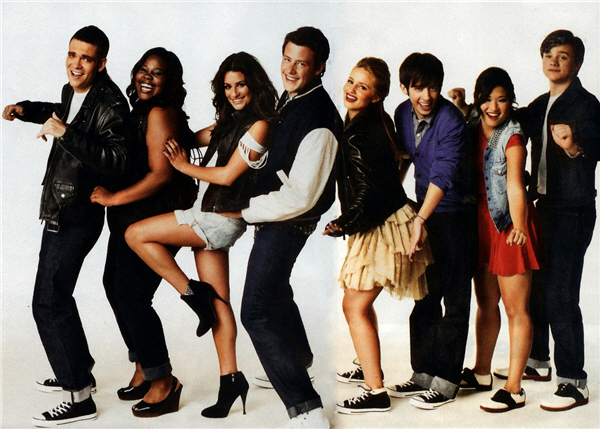
But that's not the world we live in anymore, or at least, not entirely. I see sorority sisters with their Greek-branded pink sweatshirts and Ugg boots reading George R. R. Martin paperbacks on the bus. It's long become cultural conventional wisdom that for all the trials of youth and public schooling, people who look like They Might Be Giants often end up running the show when they grow up. Porn stars play AD&D. All of this is not to say that suddenly high-school bullying is over and social misfits slide through life with the greatest of ease. The continuing success of a show like Glee attests to the universality of social ostracism in primary and secondary school - despite the fact that only in Hollywood would these people not be considered immensely attractive and successful individuals.

The point, however, remains: it doesn't mean the same thing to be a nerd in 2011 as it did in 1986 or even 1996. Now almost all of the most remunerative entertainment franchises in the world are essentially nerd properties. J.R.R. Tolkien no longer belongs to nerds. Batman, Spider-Man and the X-Men no longer belong to the nerds. Harry Potter never belonged to the nerds. The biggest comic book conventions belong to Hollywood. People who actually play sports and date real girls continue to play video games after middle school - which is something that I still can't wrap my head around. A man who became famous from publishing a black & white independent comic book about zombies appeared on an American talk show with Barbara Walters and Elisabeth Hasselback. Even good old "Weird Al" Yankovic is still going strong. It's a strange world for anyone who grew up having to hide comic books from their friends or was socially shunned for reading sci-fi paperbacks on the school bus. The underlying conditions remain - weird kids still get picked on and seek out divergent subcultures in order to find places they can "fit in" - but the collective nerd media apparatus has evolved to the point where it no longer really belongs to us anymore. In many crucial ways, nerd media is the media.

Where exactly do They Might Be Giants fit into this brave new world? What does Dr. Spock's Backup Band do when Dr. Spock is a sex symbol? That's a good question.

Monday, October 31, 2011

SIR

DC Universe Presents: Deadman #2


I am very much sensitive to possible accusations of needless cynicism and negativity. That the large majority of the Nu52 books are either deeply mediocre or reprehensible, and that they almost all represent precisely calculated attempts to pander to set demographic niches should, at this late date, go without saying. But that is not to say that there are not a handful of good books in the lot. It's even probable, if we're simply speaking in terms of raw percentage, the proportion of good titles produced under the auspices of the new regime may well surpass that of the decent titles produced under the old remit. This should not pass without some acknowledgement from those of us who respect and admire well-crafted serial escapism, and all the moreso considering its relative rarity.

Case in point: Paul Jenkins and Bernard Chang's Deadman serial currently running in DC Universe Presents. (I have no idea whether or not he is intended to be the full-time feature or, pending the book's survival past half a year, whether other characters might potentially appear in the lead slot.) This isn't a book that I've seen anyone talking about in any sustained fashion. The second issue successfully builds upon the positive impression of the first to such a degree that I am tempted to say it may just be the best book of the bunch that no one has yet noticed. That means that it will probably be canceled before it has the chance to make good on its potential.

But for now it is enough to mention that Deadman has, from almost the moment of his conception, been a character defined by nothing so much as perpetually untapped potential. In theory, Deadman's premise is almost completely open - but in practice, the character hasn't been able to sustain an ongoing series since the 1960s, and has depended on the kindness of sympathetic creators who have kept him from ever fading into obscurity. More than any other superhero character, he has counter-intuitively thrived as a result of appearing almost exclusively in cameo and guest-starring roles throughout the last four decades. People like it when he shows up in Batman, but no one ever bothers to show up when the periodic attempt it made to transfer his recognizability into headline status.

Given his prominence through the Blackest Night / Brightest Day crossover cycle, it's not surprising that DC would see this as a perfect opportunity to give Deadman another attempt at solo success. Surprisingly, this new serial does not seem to be picking up any loose threads from those stories. (Although, it should be noted that Deadman is also appearing as a supporting cast member of the new Hawk & Dove series, picking up the subplot of Deadman and Dove's love affair from Brightest Day.) But this is good: the series picks up almost from the begin, offering another version of Deadman's origin that is premised on the idea of exploring discrepancies between Boston Brand's post-life experiences and Rama Kushna's stated goals in having consigned him to an eternal half-life as an ostensibly benevolent revenant spirit. This is not virgin territory: problematic questions concerning Deadman's origin have been fair-game almost since the character's creation. But as with most things involving superhero comics, what matters most is execution. What sets this apart from most of its peers in the Nu52 is that this is simply a well-built, sturdy and very attractive comic book on every level.

Jenkins' writing has become increasingly spotty over the last few years, with a few terrible, jumbled projects appearing for every interesting idea. This series would seem to be playing to his strengths: a strongly defined central character put through the paces of an increasingly bizarre set of circumstances while remaining grounded in a keen understanding of actual lived emotions. (Cf. his Hellblazer and Hulk.) He understands Boston Brand very well: Deadman is a formerly callow and selfish person who has learned over the course of a long afterlife to be good, and to devote himself completely to selfless acts of benevolent intervention. His mission is to help people. The question presented by Jenkins of whether or not his beneficence has been guided by not-so-pure motivations is well framed, and the gradual unfolding of these ethical conflicts holds the potential to be very interesting.

I've always been a fan of Bernard Chang and am delighted to see (after a career largely defined by a few somewhat questionable choices) that he finally appears to be working on material more appropriate for his talents. He's got an incredibly smooth line and smart sense of page design, and the (sadly rare) ability to excel at drawing more than one face and body type. I could, in a word, read this book from this creative team for many years: meanwhile, we're left hoping (against hope?) that it makes it past six months.

Batman #2


Giving a strong recommendation to a Batman comic book seems almost like raving about a new McDonalds burger: how good can it really be, especially since everyone reading this has most likely read more Batman comic books than they can count? How many issues of Batman does anyone really need to read in order to have lived a sufficiently happy life?

I am still not entirely convinced that Scott Snyder's scripts would be anything special without Greg Capullo's pencils, but the fact is that the result is strong enough to make me not care.


Could there be a more bog-standard sequence in the history of comics than Commissioner Gordon talking to a medical examiner over a cold corpse? And yet just take a second to look at exactly how much loving detail has been paid to every component of the scene. The first panel, a particularly gruesome outward shot from the perspective of the corpse's gaping chest wound, looks out on Gordon and the examiner. The second panel reverses the perspective 180 degrees by showing the reader the opposite image: looking backwards towards the corpse and over Gordon's head. Look at how precisely the gimmick is executed. Gordon, the examiner and the ceiling lamp remain in precisely the same relation with one another from both perspectives. Capullo put a lot of thought into exactly what the dimensions of this crowded room actually were and how the shape of the room (claustrophobic, dark) would dictate the way the scene was told.

Then look at this page from later on in the issue, featuring a strange encounter between Bruce Wayne and Lincoln March, a candidate for Mayor of Gotham (who probably has something dastardly up his sleeve, which is how these things work):


This sequence lasts three entire pages but it doesn't get boring. Capullo knows how to make a conversation between two powerful men look exciting. He frames the conversation almost as a seduction, with March appealing to Wayne on the basis of similarly traumatic childhood experiences that both shaped their commitment to philanthropy. There are a number of subtle threads throughout the sequence: for one, March is clearly one or two inches taller than Wayne, someone who we (the readers) know is already an imposing figure. Look at how March is slumping in that first panel, before very slightly straightening his posture to loom over Wayne in an attitude of - what? A threat? a come-on? Both? Why do we linger on the way March touches Wayne's shoulder like that? The use of medium-distance top-down shots almost renders the reader into a kind of voyeur, peeking in on a scene to which he or she should not be privy.

You could certainly accuse Snyder's plot of a lack of imagination, if you so desired. There's a new ancient conspiracy in Gotham targeting the sons of wealth and privilege - etc etc. I don't particularly care for this iteration of Batman, either: it's very much the movie-indebted (and Frank Miller influenced) paramilitary Batman, a violent, hulking figure in cumbersome body armor. This isn't a graceful creature of the night nor a spry, athletic swashbuckler - but then, both of those interpretations have been on the wane for a long time now. This is very much Batman in his "where does he got those wonderful toys?" mode, flitting around with the most fanciful gadgetry - again, not particularly my favorite mode of Batman comics. So, yeah, not perfect by any stretch, and hardly something destined to become a classic of contemporary graphic fiction, but without a doubt the best Batman comic I've read in years. Take of that what you will.

Wednesday, October 26, 2011

Random Notes


This isn't an essay as much as a series of accumulated observations on the subject of music criticism. Many of these statements are offered as unsubstantiated assertions, and can be easily disputed / disregarded as you desire.


The bulk of rock music criticism is defined by the unproductive conflict of two diametrically opposed schools of thought. On the one hand, we inherit the prejudices of an imposing generation of critics who came of age at the dawn of the rock era (>cough< Greil Marcus >cough<) and who exercise a strict definition of rock music that excludes anything recorded after approximately 1972 from the canon. Under this model, every subsequent development is dismissed as errata or apocrypha, the musical equivalent of fan fiction. Additionally, most rock music can be judged on its relationship to a very parochial idea of American roots music, or the very early British interpolation thereof.


On the other, we have the current bleeding-edge model of music as fashion, a mode that persists in the process of constantly colonizing new sounds and leaving behind each successive development before they can be allowed to reach maturation. Bands are allowed perhaps ten minutes in which to appear, crystallize, and whither into dust.


Both of these generalizations are essentially unfalsifiable stereotypes, but few people would dispute the existence of these types in some iteration.


No art form is more defined by its relation to affect and emotional response than pop music. Even professional music criticism as often as not falls back on symptomatic descriptions of emotional response.


The alternative to this brand of affective reaction is to regard music almost exclusively through the dimension of performance, a model that necessarily underemphasizes the formal aspects of music. This does not necessarily have to exist in opposition to affective readings, and indeed, in practice this type of performative rhetoric often depends on an active engagement with the affective vocabulary as well.


Most - but not all - pop music criticism operates from a position of almost no familiarity with conventional music theory. Pop music criticism that does incorporate theory seems oppressively wonky in a way that technical critiques of classical or jazz usually do not.


It is very likely that we will live to see the death of rock music as a popular genre. This does not mean that rock & roll will die, but that it will undergo the same transformation that jazz experienced during the early years of rock. It will become the province of older, mostly white, mostly well-off aesthetes who have the time and inclination to keep a boutique genre alive through active curatorial interest.


I am not convinced that this is a bad idea. It has already begun, for the most part: widely popular rock bands are increasingly rare, and most of the movement in interesting and critically-acclaimed rock music already occurs at a significant remove from the pop market. Aficionados of "good" rock music are already likely as not to be economically well-off and educated: when music becomes fashion, only the fashionable will be inclined to follow.


The embrace of rock music as an affection of hipster culture has done as much as anything to drive the music away from popular audiences. The success of the Strokes in the early years of the preceding decade was the first concrete indication that music culture was changing: the widespread popularity of a group seemingly custom-designed to be appreciated exclusively either by educated rock critics or fashion-forward twenty-somethings was a harbinger of the decadence that defined the decade's music culture.


The decadent movement of the aughts reiterated the sincerity of previous forms of pop expression through a lens of ironic distance. Irony as an adjective is often misused and even more often misunderstood. It is not necessary that irony be smirking or satirical, merely reflexively self-referential. The prophylactic distance implied by irony does not necessarily imply a pejorative value judgment, and is often unintentional. It is simply a function of a musical culture built almost entirely on appropriation. Rock is built on theft, and the earliest rock & rollers all understood the irony of their positions. It was only after the sixties that irony was lost, however temporarily, eventually to be reconquered by the punks.


Hip-hop is built atop successive layers of irony in the same way a brick building is built on layers of masonry.


The color-line tension that engulfed blues and jazz as these forms made the transition from popular art forms to curatorial art forms seems to be replicating itself in contemporary rock as well, albeit in a strangely mutated form. The further removed from the mass audience rock recedes, the more anxiety surfaces over the genre's ambiguous relationship to contemporary black culture. (See: any piece of writing by Sasha Frere-Jones.)


Eventually, when rock enters its terminal decline as a popular form and begins its afterlife as a curatorial genre, the form will have to recreate its own theoretical discourse. Again, as with blues and jazz, the decline of popularity will bring with it inversely proportional attention from predominantly white academics and historians.


There is always the possibility that rock will rejuvenate itself and become once again a popular art form. I do not necessarily believe that this is unlikely, but for the moment it does not appear as if it will happen anytime soon.


Will rock have to die before an intelligent critical culture arises around the genre? An examination of the field shows that it is only in the last fifteen or so years that academics have begun to write about rock in any significant numbers. The field is growing, but as with comic studies the field has yet to cohere in any meaningfully centralized fashion beyond a number of very enthusiastic, decentralized writers working in a scattershot fashion.


The way I listen to music has become increasingly curatorial. I notice in my listening habits an increased tendency - or at least a strong desire - to undermine or deemphasize emotional experience in music in favor of formal novelty and historical significance. I am frustrated, perhaps unjustifiably, with the shape of popular music criticism, which is largely defined by fashion and fannish enthusiasm. But even just vocalizing this complaint seems bizarre and the articulation thereof reflects an attitude towards music that is probably diametrically opposed to the way most people experience the medium.


There is a tendency within me to pull in the direction of Clement Greenberg in my tastes. There's something about minimalism that seems to be - for me - the consequence of the natural progression of aesthetics. A truly minimal sound is the apotheosis of sound. The problem is that, of course, once you achieve minimalism there's nowhere to go but up.


Minimalism as a genre in visual art eventually destabilized itself, sprouting tendrils before tentatively returning to representation in the fifties and then transforming into full-blown pop by the sixties. Minimalism in music led to some very nice work being done on the Kompakt label and a few other affiliated movements but really, where do you go from there? At some point in the last few years I realized that Richie Hawtin had already pushed the envelope of minimalism as far as it can go with DE9 / Transitions - which was released six years ago. It is possible to still be minimal, and good work is still done with less, but over the last few years much of the movement in techno has been a push backwards from sparseness and into a new engagement with illustrative sound. I think the Field is probably the paradigmatic artist of the last five years as far as that movement is concerned, and I look forward to his new album with great interest.


But as I say this I also realize that my own personal listening habits are nowhere near as Apollonian as I would like to believe, or that I would like others to believe. We're all guilty of nostalgia and we're all guilty of lapsing into purely habituated affective response. Otherwise, how else would I explain something like driving around in my car all summer listening to Adele's "Rolling in the Deep" on repeat? There's a hypocrisy implicit in any kind of proscriptive aesthetic program, especially in reference to music. The emotional immediacy of music is a phenomena that often exists beyond the realm of consciousness. Sometimes we are moved despite ourselves by frankly inferior examples of form.


The strength of great pop music lies in its ability to traverse the space between formal ingenuity and emotional novelty. Pop music is an extremely regimented genre, built almost wholly on the interplay of a relatively small number of melodic, harmonic, and lyrical effects welded to the grid-like precision of the 4/4 backbeat. The ability of musicians to consistently transcend this essential limitation of form is endlessly fascinating.