Sunday, October 31, 2004

Bah, Humbug!


I don’t like Halloween. I haven’t cared for Halloween since I was old enough to know better. If you’re a kid, well, I guess its fun to dress up and go beg for candy from house to house. But if you’re a grown adult who doesn’t have kids yourself, then why the hell should it be anything but another day?

In the past, we’ve done one of two things. Either we’ve bought a lot of candy that we’ve had to eat ourselves because we didn’t get any trick or treaters, or we hidden in a dark house hoping that no-one would bother us. Additionally, there is nothing that gets the dogs riled up more than strangers coming to the door and ringing the bell, so that’s even more impetus to ignore the “holiday”.

Basically, it boils down to the multinationals having established another seasonal cash cow, more reasons for kids to whine at their parents to spend more money they don’t have on shoddily-produced crap they don’t need. Count me out, thanks.


Tom Spurgeon take a minute to speak on the subject of scary comic books here. I have to say that for the most part I agree with him. Its hard to have the same kind of thrills and chills on the comics page as on a movie or TV screen, for the simple reason that a reader can control the pace that he chooses to absorb the story.

Usually the only comic stories that have been able to scare me are ones that contain frightening ideas or create an oppressively frightening mood. I can still remember where I was when I first read The Dolls House arc in The Sandman, in particular the chapter at the “cereal” killer convention. Amazingly, I think the horror sequences of the early parts of Sandman still hold up rather well, which is something I don’t think I can say about a great deal of the dark fantasy sections which followed.

I wrote recently about the occasionally good but mostly mediocre horror books produced by Marvel/Epic to tie in to Clive Barker’s Hellraiser mythos. Looking back over that series, there are some supremely effective stories here and there. The fourth volume of their Books of the Damned companion anthology, as I wrote here, is still probably the most evil piece of fiction I’ve ever read.


But the real scary part is that we’re only 48 hours away from the most divisive election in at least the last 140 years of our country’s history. I never post political, and I don’t want to distract you if you have no interest whatsoever in whatever I have to say, so I’ll give you the chance to ignore it if you wish – there’s no shame, I often ignore political posts myself. If you disagree with me I don't want to hear any shit, because if you run your cursor over the white text you really have only yourself to blame.

I’m scared because I know there is a strong chance the “right” candidate will not win. Sure enough, the “right” candidate is a matter of opinion, but I am not joking or exaggerating in the slightest when I say that my wife and I have been seriously weighing the pros and cons of a possible move to Canada should the opportunity present itself. We are well and truly scared of what could be down the road for our country.

The worst part is that in the past few weeks I have heard a number of otherwise intelligent people – far-left liberals with whom I would normally have no serious disagreements with – tell me with a straight face that they are voting for the incumbent because they feel that the Democratic party has given them no choice. I’m a little bit afraid of this, because it says to me that certain Democrats are more afraid of the lunatic fringe of their own party than the lunatic fringe of the opposing party. It says that some otherwise intelligent people have bought the RNC’s propaganda hook, like and sinker, and that they truly believe that Kerry has inextricably wedded himself to a bunch of hippie peaceniks who would roll over on their bellies rather than fight a just war.

This is the problem with being a liberal in today’s America, and this is why I can see nothing but dark days ahead for the party, regardless of who wins on Tuesday. I ultimately do not believe that Kerry is any sort of leftist activist. I believe that despite the Republican distortions of his voting record, he is a centrist very much in the mold of every popular democrat to come on the national scene since the disastrous 80s. I believe very strongly that anyone who understands anything about how the Senate works could never seriously entertain evidence of his voting record as any sort of trail of “flip-flopping”. In any sort of deliberative body where debate is constant and bills are perpetually altered, it makes perfect sense that people would have plenty of occasions to vote for and against substantially similar bills, or even to vote or not vote for purely strategic reasons. Only Goldwater-esque ideologues (such as our Vice-President) could even hope to avoid a voting record rife with seeming contradiction. Its simply the way business is conducted in any legislative body, and God bless George W. Bush for the moral clarity that requires never having to change your mind for any reason whatsoever.

The number one issue which seems to be dividing liberals is the perception of the war. There seems to be the perception in certain quarters that simply because Howard Dean was able to exploit a vein of strong anti-war sentiment, the Democratic party as whole is nothing but a bunch of appeasement-happy hippie fools. I concede the fact that, in the Platonic ideal, the war in Iraq was a “good thing”, in that a notorious murdering dictator is no longer in power. I’m an Old-School liberal in that I believe very strongly that our foreign policy should go arm in arm with a robust humanitarian agenda. For the record, I believe that the greatest tragedy of the Clinton Administration was not the fact that Bubba got a hummer, but the fact that humanitarian intervention was discredited with such a crushing finality. If Haiti and Somalia had been successful, then perhaps we wouldn’t have waited another decade before going into Iraq, and perhaps we wouldn’t have done it so badly that the idea of humanitarian intervention has been permanently sullied by the incompetence, malevolence and malfeasance of our current “Powers That Be”.

Is it OK to do the right thing in the wrong way and for the wrong reasons? Do the ends justify the means if the whole project is executed with the kind of incompetence that actually threatens the success of the ends? I know full well that less people are still dying in Iraq now than when Hussein was in power, but the chaos and disorder that has been loosed as a direct result of our cowboy foreign policy could very well end much, much worse. (You can read all about the actual numbers at Amnesty International.)

The fact is, you can’t seriously argue with the fact that Saddam being gone is a Good Thing. But you can argue that doing a Good Thing for the Wrong Reasons (and let there be no doubt: the humanitarian excuses are just excuses thought up after the fact in this instance), in the wrong way and in such an egregiously wrong way that the security of our country is actually more imperiled now than before is a bad thing.

I don’t believe that being a liberal means that we have to apologize for the actions of our allies who opposed war in Iraq not out of any deep conviction but because they were profiting from Saddam’s regime (I’m looking at you, France and Russia). I don’t believe that being a liberal means that you can’t persecute the terrorists who present a clear and present danger to our country. Quite frankly, you’d have to get up pretty damn early in the morning to do a worse job at defending our national interests than Bush has.

But what it boils down to is that George W. Bush represents a worldview that is totally alien to mine, and totally alien to that of everyone I know. I grew up and went to school with Fundamentalist Christians. I was friends with them when I was growing up. I know at least a little bit about how they think. Compromise is not in their vocabulary. Anything less than an absolute capitulation towards their belief system is seen by them as a failure in the eyes of their God. They don’t see a divided nation as an invitation to moderation. If they screwed things up, they would fight tooth and nail to keep things screwed up if their Bible told them so. I have heard rational people argue that these same Fundamentalists do not exercise that much influence over this Administration, but they are this Administration. Re-election would be taken as carte blanche to persecute their twisted values on anyone and everyone who disagrees with them. They would not, as some people have argued, change course if an abortion ban resulted in dead women in the streets: they would take that as further evidence that their perceived righteousness is indeed the correct course of action. They are ultimately irrational, and our President reflects the kind of anti-Clerical, Manichean Medieval mindset that our country, founded in the flush of the Enlightenment, should be diametrically opposed to. In this worldview the Bible is the ultimate authority, and not the Constitution. I don’t live my life according to a fundamentalist interpretation of The Lord of The Rings, and I really can’t relate to people who live according to a Fundamentalist interpretation of the Bible.

So I cannot in good conscience say that I share any values with anyone who casts a ballot for George W. Bush. We are separated by an abyss that cannot be bridged so long as you continue to support a political establishment which actively and publicly refutes the last 500 years of Western thought in exchange for a political orthodoxy that embraces – nay, rewards – the superstitious ignorance of our distant forefathers.


Rejected Breakfast Cereal Mascots
(Number 7 in an ongoing Series)

Eno eht er’uoy, eikcud rebbur.

Dave the Satanic Rubber Duckie

“Do What Thou Wilt Shall Be The Whole Of The Law – Provided You Enjoy A Big Bowl Of Sugar Crunchy Poofter Pops!”


This product push was effectively abandoned after General Mills failed to receive the all-important endorsement of the Church of Satan.

Friday, October 29, 2004

Arrrg!


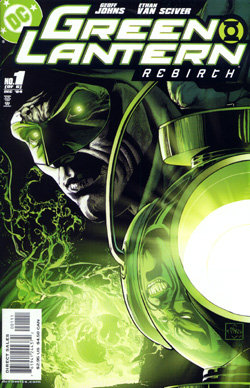
UPDATE: This week's remix, featuring Green Lantern: Rebirth, is up here!


So, how come now that everyone and their mother is doing this blogroll thing, going down the line and spouting off a pithy comment or two on their favorite bloggers, no-one has mentioned me? I mean, I try to remember I'm not the center of the universe, people, but come on... am I that forgettable? No one loves me enough to even mock me?

Waaaah! Pay attention, dammit!


Don't forget about our wonderful contest, running from now until November 10th!


Come on down to Chilis for our special fajita bar!

Green Lantern: Rebirth #1


So, I read a copy of Green Lantern: Rebirth #1. I realize that this is what the fans supposedly want, but that doesn't mean I don't feel slightly queasy while reading it. As much as I may be indifferent to most of his writing, I at least have to commend Geoff Johns for taking on such an impossible task. It's one thing to bring a character back from the dead, as Kevin Smith did tolerably well during his run on Green Arrow. It's another thing entirely to rehabilitate a character who had become a genocidal mass-murderer. I mean, are events supposed to have any weight in super-hero comics or what?

I remember a while back I was reading a particularly cogent post by someone or another on the blogosphere about how they got turned off to Morrison's X-Men by the fact that, very early in the run, after Genosha's destruction, the X-Men are basically sitting around the ruins of the sentinels' attack and cracking jokes in the immediate aftermath of a terrible genocide. Admittedly, that didn't jump out at me when I first read it, but since that was pointed out (Update: thanks to Rose's observent comment, the mystery blogger can be revealed as Adam Stephanides - you can read the bit here, but you have to scroll down to the September 2nd entry ), it has been sitting in the back of my mind for a bit here as an example of the knd of jarringly false notes that superhero comics can easily ring when you try to insert "real world" issues and emotions. I mean, if a few million people on a small island in the Indian ocean were suddenly killed without any warning, it would be a big fucking deal. I can guarantee you that the people who stumbled onto Cambodia's killing fields in the 1970s weren't popping quips.

In a similar fashion, its hard to get my mind around the fact that they are actually going ahead with the supposed rehabilitation of a character who killed more people than we really even know. Didn't he try to destroy the entire universe a couple times? That's a bit more severe than even killing a few dozen Green Lanterns and a bunch of blue midgets. If you accept that Hal Jordan actually became a megalomanical mass murderer, then you have to accept the logical fact that he could never be rehabilitated, regardless of whatever weird plot devices came up. Imagine Jeffrey Dahmer "getting better" and joining the Avengers. Imagine Pol Pot suddenly declaring that he defeated the evil sentient force in his head that made him kill all those people and was going to run for Secretary General of the UN. Not gonna happen.

Now, this is the problem when you make the superhero comics texturally inconsistant. You want actions to have consequences, and you want consequences to have some basis in objective reality... but then you have to write yoruself out of these kind of corners. I know that all the H.E.A.T. members are jumping for joy, but seriously, if Hal Jordan is actually "rehabilitated" and made into a cool superhero again, it's going to look very lame. In this one instance, storywise, Batman is 100% right. Even if he was best buddies with everyone in the Justice League, he killed a lot of people. John Wayne Gacy had a lot of friends, too, and if you follow the Rebirth's logic, he could have joined the Justice League if he had acted sufficiently contrite.

The frustrating thing is that there was a way to bring Hal Jordan back without incurring all of these massively convoluted moral conundrums. I hate to say it, but this is one instance where the example of the John Byrne Doom Patrol would definitely come in handy. If you absolutely, positively insist on having Hal Jordan back in the comics as a true-blue, noble super-hero, then you just have to do a Dallas. Have Carol Ferris stumble into the bathroom and find Hal taking a relaxing shower. None of the last ten years happened for his character. It sounds lame, but honestly, at this point its the only band-aid that would allow the parties involved to retain their dignity. Otherwise, you're stuck with a very unsatisfactory and, frankly, lame resolution to an extremely prickly problem.

You have to maintain narrative consistency. If you want to have mass murderers and genocide, fine. But you can't just have all that for a while and then go back to having hokey comic-book morality again without any sort of textural shift. Otherwise, it just looks bad.

Wednesday, October 27, 2004

The Contest Is Here!


Yes, as I promised, it is now time for The Hurting’s very first contest.

Have you ever wanted to tell me that I’m full of shit, but just didn’t have the energy to bother? Have you ever read one of my editorials or reviews and said to yourself, “That Tim O’Neil is so full of shit I bet his eyes are dark brown!” Well, now’s your chance to tell me just how full of shit you think I am – and win cool prizes in the process!

One Grand Prize Winner will walk away with a brand-spankin’ new, pristine unread mint copy of DK Book’s recent DC Comics Encyclopedia. Yes, you read that correctly. This book carries a forty-dollar price tag, but it could be yours, and all for the price of a well-reasoned or witty insult to yours truly.

Wow, that’s a nice prize.


The First Runner-Up is going to walk away with a copy of Ait/Planet-Lar’s collection of Warren Ellis’ Come In Alone essays. This groundbreaking book retails for $16.95, but it can be yours for the cost of a sweet, sweet put-down.

Wow, this is a nice prize, too.


The Second Runner-Up gets a copy of Oni Press’ compilation of Andi Watson’s Breakfast Afternoon. This sweet volume carried a retail price of $19.95, but again, you could walk home with this book for the measly price of taking the piss out of moi.

Jeez, oodles and oodles of fun prizes!


Want to enter? Here’s what you do:

Send an e-mail to timoneilisfullofit at hotmail dot com detailing why I am full of shit. It can be of any length – no minimum or maximum. You can reference any article, review or commentary I have ever written, or just rant about my general pissy outlook if you want. Just make it good.

The winners will be picked by the world’s leading expert in my being full of shit, yes, My Wife. Her decisions will be final and her criteria for picking the winners will be totally up to her. She knows me best, so she gets to be the final judge as to just why the hell I suck.

No purchase is necessary, obviously (although tips are always appreciated!). The contest will run for the duration of two weeks. Any entries accepted after Midnight, November 10 will be disqualified. Employees of DK Publishing, Ait/Planet Lar and Oni Press are disqualified from winning, but they should feel free to enter. Enter as many times as you like. Profanity is always encouraged, but My Wife reserves the right to disqualify (delete) any entry on the basis of it pissing her off. Please include your mailing address and full legal name with every entry.

Winners will be chosen no later than one week after the final deadline, after which time the winners will be announced on this blog and the prizes will be mailed in short order.

This contest comes to you courtesy of the fine people at DK Publishing, AiT/Planet-Lar, and Oni Press. They’re all fine folks and you should tip your hat to them for providing the booty for this here contest.

Now come on, tell me I’m full of shit. You know you want to.
Contest Coming


Everyone be warned - tomorrow The Hurting announces its first ever contest. We just recieved the grand prize in the mail today, and I have a feeling its something you are all going to want to enter for a chance to win.

I can guarantee that this contest will be like none other the blogosphere has ever seen. Prepare yourself.


I am really proud of this and am glad they finally saw fit to print it.


How come no one bothered to mention all the horrible misspellings in yesterday's post until it had been up for over twelve hours? Are you all laughing at me behind my back here?


Rejected Breakfast Cereal Mascots
(Number 6 in an ongoing Series)

Yo! Yo! Yo, fuck that, look at all these crab niggaz laid back, Lampin like them gray and black Puma's on my man's rack, Codeine was forced in your drink, You had a Navy Green salamander fiend, bitches never heard you scream, You two-faces, scum of the slum, I got your whole body numb, Blowing like Shalamar in eighty-one.

Warren the Wu-Tang Walrus

“Cash Rules Everything Around Me – C.R.E.A.M., Get The Milk And Make A Balanced Daily Breakfast With Delicious Toasted Oat Poofs, Dollar Dollar Bill, Y’all!”


Apparently the tots were not to eager to enter the 36 chambers of healthy breakfast foods.


Tuesday, October 26, 2004

Reckoning Revisited


A few weeks ago, I asked these important questions:

"What critical standards do we hold ourselves to?"

"What are our obligations to maintain a consistent critical standard?"

Of course, these were mainly intended as rhetorical questions. I had my ideas, but ultimately I think every one who writes about comics on a regular basis has to develop our own answers in order to be an effective critic. It's worth repeating that I try - at all times - to be extremely consistent in my criticism. I think aesthetics are an extremely important field, and I don't approach it lightly.

The worst problem facing intelligent criticism today is the fact that reviews have come to be synonymous with criticism. A review, even a well-written and witty review, is not criticism. Ultimately, the impetus behind a review boils down to a very simple question: is _____ worth spending your money on? There's no problem with writing a reivew of something. Reviews are very useful tools, and are certainly a part of the overall landscape of information that goes into the conception of criticism, but they should never be mistaken for actual criticism. That leads to a discussion of aesthetics that invariably devolves into black and white "Thumbs Up / Thumbs Down" thinking. I am sure every english teacher in the audience will agree that the pursuit of absolute and commercially-sanctioned standards of "good" and "bad" has done a great deal to dull the critical faculties of your average citizen. "I just like it" is the word on the street and the stock answer of every noncummunicative High School student - but why do you like it is the question that must be answered!

I was put back onto this line of thought by a comment on Sunday's Comics Reporter. On the subject of the Amadora Festival's compiling the "100 Best BD of the XXth Century", Tom Spurgeon asks:

"Is there ever anything to be gained by thinking about a bunch of comics and then putting some on a "Best of" list? ... As one of many comics-interested observers from around the world whose opinion was solicited for the project, CR agrees with Amadora that such lists have value -- even when no one can agree on what that value might be."


This, of course, set the little wheels in my head spinning. I have a confession to make which might make you think less of me: I absolutely love these kinds of lists. I would never be caught dead compiling one of my own, because I think that there is no greater way to expose the shortcomings of your critical faculties than to broadcast them from atop a tall building with a megaphone, but as a reader and a lay/part-time professional critic, I find them to be endlessly useful.

The best example I have on hand is the Journal's infamous "Top 100" list. I can't think of a single comics-related publication that I have referenced so exhaustively for my personal reference and in my professional capacity. I don't accept the list as anything more than, basically, some rough spitballing, general guidelines and contentious approximations. The exact computational methodology couldn't interest me less, especially as those roads have been so exhaustively travelled in the past. But the fact remains that in creating such a guide, the Journal created probably the single best existing one-volume reference work on 20th century American comics that yet exists. If someone came to me out of the blue and said "I don't understand the basics of comics aesthetics, is there a guidebook to what is generally considered 'canon', and why?" I would give them my copy of the Journal's Top 100 list. As Spurgeon himself put it so well:

"Lists allow the person making them to take the temperature of their own tastes, and to think of their chosen medium of interest for the forest rather than the trees, on the whole rather than work by work. It may also drive a critic to find and engage work out of their usual comfort zone.

"Just as important is that readers and critics can then use the lists compiled in any number of ways: to discover new works, to develop new ways of looking at familiar works, to get a snapshot of the usefulness of a specific critic for your own future needs, to expose yourself to competing summary views of an art form and what's important in it, or even as a silent debate partner to sharpen your rhetorical tools."


Criticism, at its best, is a way of interacting with an art form in a kind of cultural dialectic. Not to bring up the hoary old spector of Plato, but in a perfect world enlightened critics would exist in a symbiotic relationship to the art they critiqued and with the artists who create it. Of course, I shouldn't need to say that this isn't how the world works, and the world has never really worked this way.

The closest thing I can remember in recent memory to this type of critical Nirvana was during the 60s and early 70s, when some very odd and wonderful things began to happen in international film. Critics and artists seemed to actually be interested in moving The Medium (in capital letters, of course) forward through some kind of ongoing dialogue. Of course, it worked in some ways and it didn't work in a lot of others, and then Spielberg and Lucas came along and made the whole thing moot. Unfortunately, most filmmakers seem to excercise the amusing notion of working in a critical vacuum in reference to their forebears these days, because any young filmmaker who talks about the influence of Kurosawa or Cassavetes in a magazine or television interview is seen as, at best, pretentious and callow, and at worse, extremely disengenuous. People don't like their art to come with footnotes, real or implied, and most critics who work with footnotes don't have anything remotely resembling a popular audience.

A lot of this can be taken back to the notion that reviews have supplanted criticism in the popular vocabulary. How many times have you heard something like "its like Die Hard meets the Seventh Seal?" (Not so much anymore, admittedly, but for a while there everything was "X meets Y ... on a pirate ship!") Comparisons like this don't have any meaning any more: they're grist for the mill commercial pitches turned into industry shorthand. The fact that so much of what used to be critical dialogue has been taken up by economic shorthand should tell us how much the art of serious criticism has devolved (I'm hardly the first person to point that out, but it seemed a nice point to reiterate since I was already in the neighborhood).

So what am I saying? I am saying that I awknowledge my job as A Critic to be a thankless task. I awknowledge the fact that I write a great deal of reviews and not nearly enough actual commentary. I awknowledge the fact that while most art is compromised to some extent by commercial origins, it is disengenuous of any critic to ever dismiss the commercial circumstances surrounding the origins and ongoing status of any given art object, for good or ill. I can't dismiss a piece of art because it was created work-for-hire, but I can't dismiss the fact that it was created in a work-for-hire situation, either.

I was having a discussion with an acquaintance of mine the other day. He's an educated fellow, but we got stuck on the notion, which I posited without even thinking, that any work of art should be accepted as "Art", without any thought given to the aesthetic merits of said art object. Of course, this seemed absolutely elementary to me, but he argued that "art" was not a basic noun, it was a category, and if something was bad art, it wasn't really art. Which was, to me, preposterous. There is nothing to be gained by making "Art" into an exclusive category, and everything to be won by merely accepting every piece of art, no matter how trifling or horrid, as a part of a greater hypothetical continuity. The challenge then is not to discover and demarcate what is and isn't art, but why certain art is better than other art.

It should be noted that my acquaintance, while a practicing professor who teaches for a prominent university, is not an expert in aesthetics. His arguments were intelligently proffered but, to my perception, poorly reasoned. Ultimately, even a smart man can be misled by our society's debased aesthetic sense. Again, it doesn't matter whether or not something is "good" or "bad" in a deeply Platonic way, because that is an impossible question to answer. What matters is why something is percieved as being better or worse than something else. It is by engaging this question on its deepest levels that we can begin to understand our own critical standards, and the critical standards of our particular community.

Which brings me back to the topic of lists. In so many circles, a list of great works is just callow commercialism - and for much of the world, that's all they are. Does any serious critic take those abysmal AFI lists as anything other than a big commercial for the studio's archival backlist? But the idea of "The List", in theory, offers the greatest possible opportunity for a critic to excercise the kind of thinking muscles that he has to keep vigorous and healthy in order to maintain a comprehensively acute mental apparatus.

Why is Krazy Kat better than Peanuts? Is it? That's a damn good question, and one that you could reasonably spend the rest of your life parsing. These are the type of assumptions that are necessary to underlie any intelligent aesthetic discussion, and the constant and consistent reppraisal of these assumptions is the lifesblood of any creatively coherent and intelligently dynamic medium.


Rejected Breakfast Cereal Mascots
(Number 5 in an ongoing Series)

Apparently he’s into bestiality, seeing as how he’s a monkey, and not a man.

Otis the Onanistic Orangutan

“The Only Thing That Can Possibly Stop Me From Touching Myself Is A Nice Bowl of Wonder Whoopie Crisps!”


The strange this about Otis is that he did test extremely well with certain focus groups, but still didn’t make the cut. Despite his obvious appeal, it boils down to the probably fact that General Mills, unlike Marvel Comics, didn’t want to be seen as publicly courting the pervert demographic.