Hiatus Means Never Having To Say You're Sorry
Well, don't say I didn't warn you. I'm going to be in California for the next month or so, and while I will be able to check my e-mail and I will try to keep abreast of comings and goings in this here blogosphere, I don't anticipate spending too much time, if any, doing actual blogging. If I do, I'm sure the blogging updates page will tell you.
In case you care (not that you do) my mother is undergoing a rather serious operation and I'm going home for a while to help out. Nothing more, nothing less.
So, while I wanted to finish "Travels With Larry," unfortunately I will have to leave off for the time being. When I return I anticipate picking up right where I left off... which, all things considered, might just be a good thing for Larry, since by then the initial buzz of his first press "blitz" will have worn off across the blogosphere and he'll probably be anxious to hear people talking about him again. So, we'll pick up with the next chapter when I return. Even if the rest of the books in my AiT pile suck (which I doubt) I expect to spend quite a bit of time mulling over Warren Ellis' "Come In Alone" collection and Mr. Young's "True Facts" pamphlet/digest, so expect some good and meaty blogging when I return.
In other news, I'm supposed to pass this along to you, courtesy of the Larry Young Delphi Forum: "Hawaiian Dick" is being made into a movie. Better yet, instead of just another in a long line of Hollywood options, this seems to be actually moving forward, 'cause it looks like they got a star attached, Mr. Johnny Knoxville. (I'll hold off on any jokes about the dubious nature of Mr. Knoxville's stardom - he seems to be getting good advance praise for his work in that forthcoming Graham Parsons psuedobiopic, so I'll withhold judgement - stranger things have happened!)
The trip to the Larry Young Forum is worth it if only to see the James Kochalka pirate illustrations. Does this mean anything? I only ask because AiT/PlanetLar is probably the only serious indie publisher who hasn't published anything by Kochalka...
So, that's it for a while. I'm pretty tired now because the Wife and I just got back from seeing Einsturzende Neubauten in Boston. Great show, just fantastic. If they're in your neck of the woods, you should definitely check them out. I am tempted to say you can't really "get" them unless you've seen them live, but I won't... suffice it to say that The Wife, who has been listening to them for longer even than I, came away with a new respect for what they do after seeing them bang away on their metal instruments in person. And Blixa Bargeld is surprisingly very funny... I don't know what exactly I was expecting but a ten minute stand-up bit about being stuck in the Chicago airport for two days was not it. A splendid time was had by all.
Oh, one last thing you might like to hear. I was having a conversation with Larry Young over the e-mail, and the topic of the next "Astronauts in Trouble" book came out. I won't give anything away, but I will simply say that I think dropping the whole "astronaut" motif and going with "mimes" is a dicey proposition... "Mimes in Trouble" just does not have the same ring to it. And I think everyone who sees Larry Young in any capacity at any point in the future should point out to him that mimes are just not a good idea, and he should be ashamed of himself for thinking otherwise.
So, that's that. If you need me, drop me a line. Catch you on the flip side.
Monday, April 26, 2004

Friday, April 23, 2004

OK, first of all, if you have any memory at all of the God-Awful "Captain Planet" television show, I think you should go here and read a pitch for the Vertigo version.
Back?
OK, "Travels From Larry" is taking on a life of its own. I seem to be writing more and more about each book. This is going to have to stop at some point, hopefully soon. Starting sometime roughly in the middle of next week I'm going to be taking a long hiatus from blogging and the internet in general (due to family obligations), so I sincerely hope to be done with this by then. I still have more than a few books to get around to and I don't want to shortchange any of them. Don't worry, I won't be gone for good, but I will be gone for a while.


Travels With Larry Part VIII
Astronauts In Trouble Part II
“Astronauts in Trouble” is a deeply satisfying work. It is one of those rare books that seems to have been created with an absolutely perfect conception of exactly what it is and is not. It’s a book that knows its limitations, which is certainly an achievement worthy of our respect.
If anything, my one problem with “AiT” is the fact that Larry Young seems too preoccupied with his own humility. As a storyteller, he rarely makes a wrong move. That his instincts seem so perfectly attuned to this project is perhaps a function not so much of the gemlike-perfection of the stories themselves but of their modest scope.
Let’s face it – science-fiction is nothing if not a historically bombastic genre. It’s usually “end of the universe” this, or “secret of existence” that. Comparatively rare is the sci-fi story that desires nothing more than to open a brief window on another time or place, to elucidate the feelings and thoughts of people in situations just different enough from our own to be interesting. This was something Heinlein excelled in, at least in his early years – illustrating the future through people. When he got older and started writing about Oz and John Carter and bringing together all the disparate elements in his own fiction, he lost sight of this notion.
There’s no bombast in “AiT,” and for that, given the almost comically cosmic nature of most sci-fi, we are grateful. But at the same time, the work is almost too lean, almost too spare. I think I can see why. There’s an old truism that “it’s better to say nothing and be thought a fool, than to speak and erase all doubt.” This is a very subtle trap for growing writers. We all know any number of impossibly verbose beginning authors: the kind who never use one word when twelve will do, and who have never met an adverb they didn’t like. It’s easy to be seduced by minimalism. I’m not going to say that “AiT” is minimal – “I Never Liked You” is minimal. But for a rip-roaring space adventure, it is sparse (particularly “Live From The Moon”).
By the time we get to “Space 1959,” Young’s voice has become much more confident. If anything, I would say that Young’s writing style reminds me of early “Cerebus.” In “High Society” and the early parts of “Church & State,” Sim weaves any number of incredibly complicated plot threads together into a coherent whole somewhat perversely by allowing the reader to perceive only selected parts of the story. In “High Society,” we see only what Cerebus sees, and the young Cerebus’ knowledge of politics is famously scattershot. Similarly, in “Space 1959,” Young adopts the similar tack of allowing the story to unfold organically without any real artificial impetus or conceit. We see the action unfolding as the Channel 7 Team does, and sometimes that means that events are slightly confusing or that character arcs are abridged.
But it’s not laziness, its really quite sophisticated. “Live From The Moon” isn’t quite as successful because there’s more story in it. We don’t see things solely through the eyes of the newscrew. Lots of things happen and Young tries to show us everything, but really, that wasn’t necessary. There's too much going on and he doesn't know how to show his cards gracefully. There’s definitely a progression from the first book to the second. Young knows what he’s doing, and the fact that “Live From The Moon” works as well as it does despite the slightly inconsistent narrative is a testament to his skill. But sometimes no matter how smart you are you have to learn by doing. Sometimes people repeat their mistakes often enough that they call it a career, and sometimes people possess the capacity to learn more from their misses than their hits. This is why “Space 1959” is a better read than “Live From The Moon,” and this is why I think whatever is next might be even better.
“Astronauts in Trouble” makes me want to go watch “The Right Stuff” again, or better yet, maybe get around to reading the book. It’s obvious that Larry Young is attracted to the actual nitty-gritty of rocketry and space travel. I doubt he would be very interested in a universe of frictionless gravity boats and faster than light travel. You never forget that space is a very dangerous place.
“One Shot, One Beer” is a trifle, but a perfectly pleasant trifle. If you’re up on your Bocaccio or your Chaucer you know the drill – a group of strangers are telling stories to pass the time. The stories are fun, with some interesting diversions and a few insights into the details of the “AiT” future history, but the book is mainly a showcase for Young’s dialogue. Of the three main features in the “AiT” omnibus I think this is my least favorite, but I will admit I am usually not a fan of the “manly men drinking beer” genre. Maybe I don’t hang out in bars enough – I mean, I know people do hang out in bars, but I don’t see the attraction. Give me a quiet night at home with the wife and a glass of soda pop. But I can’t stand liquor myself so perhaps I’m just biased.
There are a few brief bits in the end that round out the volume nicely. There’s a great Steve Weissman two-pager that reads like it was ripped out of the pages of “Tykes.” I’m tempted to say that my favorite thing in the entire book is an eight-page Darick Robertson story called “More Fun Than,” but I think I just like it because Robertson draws the funniest monkeys in comics. Someone needs to hire him to do a whole book full of monkeys.
I think “Astronauts in Trouble” is the best thing I’ve so far read from AiT/Planet Lar. It’s as good an adventure comic as you can hope to find on the stands today – intelligent without being cerebral, mordant without becoming Wodehouse In Space. I hasten to say that this Larry Young fellow has a bright future in comics – with a resmue like “AiT” I expect he’ll get himself a gig writing “Thor” or “Metamorpho” in no time at all.
PS - Hey, Larry, I think I know what your next AiT is going to be about. I won’t give it all away, but I’ve got your pitch right here: robot miners in the asteroid belt. You can have it, gratis.
Thursday, April 22, 2004
SWASTIKA EYES
Man, remind me to call people sincerely retarded again sometime soon. It really is fun.
OK, maybe this is my fault - maybe I'm too "subtle." My wife is always accusing me of being a horrible joke-teller because I'm so straight-faced you can't tell when the punchline is being delivered (to say nothing of the content of the jokes themselves). I hope I'm too subtle - because I don't want to think people are stupid.
Do you remember Spinal Tap? Everyboy loves Spinal Tap. The post from two days ago was The Hurting's idea of satire. Does this mean that the ideas were stupid? No. But the way the ideas were communicated... satire. I hoped that spending pages babbling about "Millennium would clue people into the fact that, hey, these words are about as rational as a foil-wrapped cucumber in my pants.
I got into a wonderful e-mail conversation with Larry Young after the last post. Basically, I think he "got" it, but I don't know if he "got" that it was basically a put-on. Yes, there's some deep frustration in there, but it's the type of frustration I think every person who truly cares about comics - from Gary Groth on down to your local retailer and even you, yourself, in your darket moments - can relate to. So, when I start babbling about a horrible 17 year-old crossover, take it from me that I'm not presenting any deep and thoughtful analysis, I'm not seriously staking any claim to any freakin' side of the "continuity" debate whatsoever...
I look around the blogosphere and see all sorts of people reacting with a totally straight face to words I wrote in a feverish tizzy of insanity. It's funny. Not because I fooled you, because I didn't mean to fool you. I meant every word I said... I just didn't mean you to take it so seriously. It's funny because it's sad, you know? There are some good bits in there that, if I had wanted, I could have sat here and wrote a good straight opinion piece on, but instead I chose to weave a strange rambling dissertation on "Millennium" and sincere mental retardation. If that phrase wasn't enough to tip you off that my tongue was planted firmly in cheek, well, I'm sorry. Do I need to label it as I humor column? Do I? Does the presence of a few valid points in betwee nthe sarcasm invalidate the humor content? Is the humor content even humorous? These are the questions I wrestle with during the long, dark midnight of my blackened soul.
And, hey, just so you know - I didn't buy Wildcats 3.0 or (until very recently) Stormwatch: Team Achilles either. Yeah, I'm a hypocrit, so what? But my point is still 100% valid - whether I bought the book or not, shouldn't we as an industry be able to support smaller niche titles without having to call out the National Guard in order to do it? I regret not buying Wildcats while it could have made a difference - it's actually a book that had been on my "should give a try soon" list. I feel bad whenever people's favorite books get cancelled, it's happened to me too. I feel bad when books that by every objective standard are critical darlings can't gain sales traction. Basically, Steven Grant wrote the non-Bizarro version of Tuesday's blog post over at this week's Permanent Damage. We must be sharing some kind of cosmic brainwave loop or something, because seriously, he is writing exactly what I was thinking, only he didn't write it as a dismissively insulting satire. Anyway, read what he has to sday, go back and re-read "Kill All Hippies" and tell me you don't see the satire now.
Seriously, people, I'm starting to get worried. It's like the blogosphere wants to
hyperventilate on controversy.
Man, remind me to call people sincerely retarded again sometime soon. It really is fun.
OK, maybe this is my fault - maybe I'm too "subtle." My wife is always accusing me of being a horrible joke-teller because I'm so straight-faced you can't tell when the punchline is being delivered (to say nothing of the content of the jokes themselves). I hope I'm too subtle - because I don't want to think people are stupid.
Do you remember Spinal Tap? Everyboy loves Spinal Tap. The post from two days ago was The Hurting's idea of satire. Does this mean that the ideas were stupid? No. But the way the ideas were communicated... satire. I hoped that spending pages babbling about "Millennium would clue people into the fact that, hey, these words are about as rational as a foil-wrapped cucumber in my pants.
I got into a wonderful e-mail conversation with Larry Young after the last post. Basically, I think he "got" it, but I don't know if he "got" that it was basically a put-on. Yes, there's some deep frustration in there, but it's the type of frustration I think every person who truly cares about comics - from Gary Groth on down to your local retailer and even you, yourself, in your darket moments - can relate to. So, when I start babbling about a horrible 17 year-old crossover, take it from me that I'm not presenting any deep and thoughtful analysis, I'm not seriously staking any claim to any freakin' side of the "continuity" debate whatsoever...
I look around the blogosphere and see all sorts of people reacting with a totally straight face to words I wrote in a feverish tizzy of insanity. It's funny. Not because I fooled you, because I didn't mean to fool you. I meant every word I said... I just didn't mean you to take it so seriously. It's funny because it's sad, you know? There are some good bits in there that, if I had wanted, I could have sat here and wrote a good straight opinion piece on, but instead I chose to weave a strange rambling dissertation on "Millennium" and sincere mental retardation. If that phrase wasn't enough to tip you off that my tongue was planted firmly in cheek, well, I'm sorry. Do I need to label it as I humor column? Do I? Does the presence of a few valid points in betwee nthe sarcasm invalidate the humor content? Is the humor content even humorous? These are the questions I wrestle with during the long, dark midnight of my blackened soul.
And, hey, just so you know - I didn't buy Wildcats 3.0 or (until very recently) Stormwatch: Team Achilles either. Yeah, I'm a hypocrit, so what? But my point is still 100% valid - whether I bought the book or not, shouldn't we as an industry be able to support smaller niche titles without having to call out the National Guard in order to do it? I regret not buying Wildcats while it could have made a difference - it's actually a book that had been on my "should give a try soon" list. I feel bad whenever people's favorite books get cancelled, it's happened to me too. I feel bad when books that by every objective standard are critical darlings can't gain sales traction. Basically, Steven Grant wrote the non-Bizarro version of Tuesday's blog post over at this week's Permanent Damage. We must be sharing some kind of cosmic brainwave loop or something, because seriously, he is writing exactly what I was thinking, only he didn't write it as a dismissively insulting satire. Anyway, read what he has to sday, go back and re-read "Kill All Hippies" and tell me you don't see the satire now.
Seriously, people, I'm starting to get worried. It's like the blogosphere wants to
hyperventilate on controversy.
Tuesday, April 20, 2004
KILL ALL HIPPIES

So I’ve been reading “Millennium” lately. Don’t ask why – really, is there a possible good answer for that? I mean, reading “Millennium” is the comic book equivalent of a horseradish enema. It’s not fun.
And yet I’m reading it. Apparently the Guardians of the Universe, who had left the universe sometime either right before or right after “Crisis,” have decided to return to the planet Earth with their Zamoran brides and usher in the next evolutionary stage of mankind. This involves ten people chosen totally at random by the Guardians in order to fulfill the cosmic prophecy that Earth will spawn the next race of galactic immortals. But, here’s the hook to really get all the kids – the Manhunters are opposed to this, so they want to stop the Guardians and the superheroes from bringing about the next step in human evolution – which everyone refers to as “The Millennium.”

Does this make sense? Thought not. See, the Manhunters are this ancient organization of beings who were really the Guardian’s first experiment in law-enforcement technology, and they really have it in for the little blue fellows.
I have a feeling that this is all Roy Thomas’ fault. Because there’s this almost unreadable issue of Secret Origins in the middle of this story that features – heh- the Secret Origin of the Manhunters. And I mean every Manhunter, from the multiple Golden Age Manhunters (who had been published by separate companies even), to the Kirby Manhunter, to the Simonson Manhunter – it just gets deeper and deeper. Someone decided that everything in the post-Crisis DCU had to refer to everything else, so there is no such thing as coincidence anymore. Every character who ever called himself a Manhunter, and every story that even slightly referenced the concept of Manhunting, is part of this Millennia imbroglio.
This is all filtered through the hyper-paranoid Cold War atmosphere that was thick throughout every DC book in the late 80's. Everything is muddy browns and ugly blues. There are constant and depressing reminders of nuclear war and the rising tide of Islamic fundamentalism. There's one issue where - I swear to God I couldn't make this up - the Blue Beetle travels to Iran to rescue this woman in a burka who has been selected by the Guardians for the Millennium project. She is, of course, stoned for her blasphemy against Allah. I have to wonder what kind of special crack they were smoking when they were plotting this thrill-a-minute crossover.

And it is a crossover in only the very best sense of the word, meaning that every title published by DC during the duration of the story was a crossover. Even stories that didn't have anything at all to do with Millennium still had the "Millennium" logo on the cover. And there was a caption on the front page of every story that said you had to read that week's issue of Millennium for this book to make any sense. Man, this just gets better.
The best part was that they decided to have Manhunters infiltrate every segment of the DCU, in order to gather information and sabotage their plots. So, wouldn’t you know it, the entire town of Smallville turns out to be . . . that’s right, you guessed it, Manhunters! Commisioner Gordon, he’s a Manhunter too. Hey, the Greek demigod Pan? He’s a Manhunter as well. Makes so much sense my teeth hurt. Makes so much sense, they decided that this story was so cool they never mentioned it again.
Comic books are the playground of the retarded. Whether your particular retardation is social, physical, sexual or mental, if you care enough to read this you are a retard. Reading “Millennia” brings this truth painfully alive for me. As un-PC as it may seem, it’s the diggedy-dang truth.

“Crisis on Infinite Earths” is the kind of story that really only makes sense if you were dropped on your head as a child – I see that now. I know we’re not supposed to care about things like “continuity,” but how is it possible to ignore the facts? If Batman and Green Lantern have been around and fighting crime for many years, and Wally West has been a superhero long enough to grow from a young teen to an adult – how can Superman have only been around for a couple years? Batman would have to have been Batman for at least ten years by the time of Millennium: he didn’t get Robin until Year 3, Robin had enough time to grow from a pre-teen to a grown adult and become Nightwing, and Bats even had enough time to find a brand new sidekick in Jason Todd – but Superman has only been around for a couple years. Yeah, OK. Even though every other story ever written contradicts this. If this whole thing doesn’t insult your intelligence, you don’t have any.
So, why do I read these things? Er, next question. Is it is a strange compulsion or deep-seated masochism? I don’t know. I’ve got a strange love-hate relationship with bad superhero books: I hate them, and yet I love to throw away hours of my life which I will never be able to reclaim in order to read them.

It makes me wonder, really, why people like Larry Young bother. I mean, really, it’s obvious that if you’re still in comics at this point and you’re Christian name isn’t Geppi, you’re in it either out of love or a misguided sense of idealism. Well, folks, idealism can’t pay the bills. The really good comics don’t sell.
Used to be, mid-to-bottom list titles like “Guardians of the Galaxy” could have nice, healthy runs without setting the sales charts on fire. I mean, “GotG” lasted 62 issues, with four annuals and a spin-off limited series. Obviously there was enough of a demand for the Guardians to bolster the series through five years and change of continued publication. It never set the world on fire, but enough people cared to keep it afloat for a long time. I think you can judge the health of any publishing field by the strength of the midlist. Anyone can make money selling a blockbusters, best-sellers that everyone wants to read – but if you can make money on mid-and-low performance titles, well then you have a healthy and diverse industry. You can publish books like “X-Men” that you know everyone is going to buy, but enough people are buying the books that you can branch out and have a little something for everyone. You’re not subsidizing the lesser titles at the expense of the big shots, but there are enough people buying comics that you can make money off of niche titles.

We don’t live in this world anymore. You either sell out your print-run or you are in imminent danger of cancellation. You either have a solid, proven property or you will be cancelled in a year.
There are more dead and forgotten properties than ongoing and successful franchises. And – here’s the kicker – it’s impossible to resurrect a dead franchise. Let me explain this one:
Say you’re a comic book publisher and you have an old property that you think might be due for a relaunch. You can take any old property – doesn’t matter if we’re talking “Alpha Flight” or “Firestorm,” it’s the same principle. On the one hand, the people who have never read the book are probably going to be skittish about picking up a new book that has years and decades of back continuity – because even if the continuity is kept to a dull roar, most readers would know that it’s still there, and that is a discouraging factor for many readers. And on the other hand, the people who have been your bread-and-butter for years – the fanboys, the intensely, painfully retarded fanboys – they want the book to pick up where it left off. They don’t just want the same character. They will be happy with nothing less than a retroactive uncancellation of the title in question. They don’t want to read the adventures of the All New, All Different “Alpha Flight,” they don’t even want to remember the 1997 relaunch that didn’t last past #15, they want Marvel to pick up publishing Alpha Flight again with issue # 129. Actually, that’s not quite true – they want the book to be retroactively relaunched from issue #29, because #28 was the last Byrne issue.

Oh, boy, but I wish I was exaggerating here. The sad fact is there are three types of comic readers today: those who know what the terms pre- and post- Crisis mean, those who know but don’t care, and Manga readers. And there are probably about 50 of the third type for every one who belongs to either of the first two types.
So, what does all this have to do with Larry Young and “Millennium”? Damn good question.
The comics industry, at least, the mainstream direct market, is fucked. The comics field is stronger than its been in years, with kids and women reading Manga, “art” and “alternative” comics racking up critical acclaim and respectable sales totally independent of the direct market, online comics coming into their own after a turbulent adolescence, and even the dead newspaper strip showing faint signs of life. But there are still not enough comics readers to support books like “Wildcats 3.0” and “Stormwatch: Team Achilles.” This tells me that not only is the average mainstream comic reader functionally illiterate, as well as sincerely retarded, but that we have a deeply unhealthy industry. If we can’t support even a few critically-acclaimed but low-selling titles, we can’t even pretend that there’s enough market diversity to power a 60-watt lightbulb.

Am I telling you anything you don’t already know? Well, look at this: “Sleeper” is probably the most popular cult book around today. It’s getting a brand new relaunch and Wildstorm is confident enough that the trades will sell to put their tentative support behind the book, for the time being. But do you know what had to happen here? The people who like “Sleeper” had to move heaven and earth to drum up the necessary support for this. This ain’t a television series like “Star Trek,” we’re talking about a small comic book that maybe ten thousand people read on a good month. Is this insane or what? You could probably get everyone who really likes “Sleeper” together in a medium-size gymnasium and have Ed Brubaker tell the stories in pantomime for less trouble.
We have lost the ability to change. When you have to have a huge line-wide crossover in order to simplify your books, instead of just, you know, simplifying your books, that seems to me to be the first indicator that something is wrong. They say we need to drop the continuity, but frankly, it doesn’t matter whether we publish “Ultimate Spider-Man” or “Infinity, Inc.” Everything kowtows to everything that has come before, simply by virtue of their having been something before. Try as they may, I don’t believe that the new “Doom Patrol” will be able to escape the stigma of blatantly retconning some of the most beloved stories of the last decade into Hypertime/oblivion. Anyone who would care enough about the Doom Patrol to actually want to buy a “Doom Patrol” comic is going to be offended by the retcon. And if you don’t know who the Doom Patrol are, you’re likely not going to care anyway unless they get Jim Lee to draw it.
The fact that “Powers” is going to triple or quadruple its orders by moving to Marvel is a sign that we as an industry have reached the point of no return.
I love reading crappy old comics like “Millennium.” It cleanses my soul, kind of like the self-inflicted scouring that medieval monks put themselves through. As much as I love sitting down and reading something new and great like “Astronauts in Trouble,” I almost don’t want to do it anymore. I don’t want to become attached to something just to see it die – or, if it doesn’t die, it will languish. I don’t know. Maybe it won’t. But the fact that something like “Astronauts in Trouble” has to compete for shelf space with the All-New All-Different “Alpha Flight” is suicidally depressing. If people like Larry Young really and truly cared for the comics industry, they’d put a slug in our brain and call it mercy.
We’re at the event horizon. There really is nothing we can do about it at this point. This world shall die and from our ashes shall rise the New Gods, and the twin world of Apokalips and New Genesis. Gary Groth shall bestride the cosmos like a titan, and he shall eat your “Millennium” back issues, transforming them with the cleansing fire of his belly into mulch for the new constellations.
So I’ve been reading “Millennium” lately. Don’t ask why – really, is there a possible good answer for that? I mean, reading “Millennium” is the comic book equivalent of a horseradish enema. It’s not fun.
And yet I’m reading it. Apparently the Guardians of the Universe, who had left the universe sometime either right before or right after “Crisis,” have decided to return to the planet Earth with their Zamoran brides and usher in the next evolutionary stage of mankind. This involves ten people chosen totally at random by the Guardians in order to fulfill the cosmic prophecy that Earth will spawn the next race of galactic immortals. But, here’s the hook to really get all the kids – the Manhunters are opposed to this, so they want to stop the Guardians and the superheroes from bringing about the next step in human evolution – which everyone refers to as “The Millennium.”
Does this make sense? Thought not. See, the Manhunters are this ancient organization of beings who were really the Guardian’s first experiment in law-enforcement technology, and they really have it in for the little blue fellows.
I have a feeling that this is all Roy Thomas’ fault. Because there’s this almost unreadable issue of Secret Origins in the middle of this story that features – heh- the Secret Origin of the Manhunters. And I mean every Manhunter, from the multiple Golden Age Manhunters (who had been published by separate companies even), to the Kirby Manhunter, to the Simonson Manhunter – it just gets deeper and deeper. Someone decided that everything in the post-Crisis DCU had to refer to everything else, so there is no such thing as coincidence anymore. Every character who ever called himself a Manhunter, and every story that even slightly referenced the concept of Manhunting, is part of this Millennia imbroglio.
This is all filtered through the hyper-paranoid Cold War atmosphere that was thick throughout every DC book in the late 80's. Everything is muddy browns and ugly blues. There are constant and depressing reminders of nuclear war and the rising tide of Islamic fundamentalism. There's one issue where - I swear to God I couldn't make this up - the Blue Beetle travels to Iran to rescue this woman in a burka who has been selected by the Guardians for the Millennium project. She is, of course, stoned for her blasphemy against Allah. I have to wonder what kind of special crack they were smoking when they were plotting this thrill-a-minute crossover.
And it is a crossover in only the very best sense of the word, meaning that every title published by DC during the duration of the story was a crossover. Even stories that didn't have anything at all to do with Millennium still had the "Millennium" logo on the cover. And there was a caption on the front page of every story that said you had to read that week's issue of Millennium for this book to make any sense. Man, this just gets better.
The best part was that they decided to have Manhunters infiltrate every segment of the DCU, in order to gather information and sabotage their plots. So, wouldn’t you know it, the entire town of Smallville turns out to be . . . that’s right, you guessed it, Manhunters! Commisioner Gordon, he’s a Manhunter too. Hey, the Greek demigod Pan? He’s a Manhunter as well. Makes so much sense my teeth hurt. Makes so much sense, they decided that this story was so cool they never mentioned it again.
Comic books are the playground of the retarded. Whether your particular retardation is social, physical, sexual or mental, if you care enough to read this you are a retard. Reading “Millennia” brings this truth painfully alive for me. As un-PC as it may seem, it’s the diggedy-dang truth.
“Crisis on Infinite Earths” is the kind of story that really only makes sense if you were dropped on your head as a child – I see that now. I know we’re not supposed to care about things like “continuity,” but how is it possible to ignore the facts? If Batman and Green Lantern have been around and fighting crime for many years, and Wally West has been a superhero long enough to grow from a young teen to an adult – how can Superman have only been around for a couple years? Batman would have to have been Batman for at least ten years by the time of Millennium: he didn’t get Robin until Year 3, Robin had enough time to grow from a pre-teen to a grown adult and become Nightwing, and Bats even had enough time to find a brand new sidekick in Jason Todd – but Superman has only been around for a couple years. Yeah, OK. Even though every other story ever written contradicts this. If this whole thing doesn’t insult your intelligence, you don’t have any.
So, why do I read these things? Er, next question. Is it is a strange compulsion or deep-seated masochism? I don’t know. I’ve got a strange love-hate relationship with bad superhero books: I hate them, and yet I love to throw away hours of my life which I will never be able to reclaim in order to read them.
It makes me wonder, really, why people like Larry Young bother. I mean, really, it’s obvious that if you’re still in comics at this point and you’re Christian name isn’t Geppi, you’re in it either out of love or a misguided sense of idealism. Well, folks, idealism can’t pay the bills. The really good comics don’t sell.
Used to be, mid-to-bottom list titles like “Guardians of the Galaxy” could have nice, healthy runs without setting the sales charts on fire. I mean, “GotG” lasted 62 issues, with four annuals and a spin-off limited series. Obviously there was enough of a demand for the Guardians to bolster the series through five years and change of continued publication. It never set the world on fire, but enough people cared to keep it afloat for a long time. I think you can judge the health of any publishing field by the strength of the midlist. Anyone can make money selling a blockbusters, best-sellers that everyone wants to read – but if you can make money on mid-and-low performance titles, well then you have a healthy and diverse industry. You can publish books like “X-Men” that you know everyone is going to buy, but enough people are buying the books that you can branch out and have a little something for everyone. You’re not subsidizing the lesser titles at the expense of the big shots, but there are enough people buying comics that you can make money off of niche titles.
We don’t live in this world anymore. You either sell out your print-run or you are in imminent danger of cancellation. You either have a solid, proven property or you will be cancelled in a year.
There are more dead and forgotten properties than ongoing and successful franchises. And – here’s the kicker – it’s impossible to resurrect a dead franchise. Let me explain this one:
Say you’re a comic book publisher and you have an old property that you think might be due for a relaunch. You can take any old property – doesn’t matter if we’re talking “Alpha Flight” or “Firestorm,” it’s the same principle. On the one hand, the people who have never read the book are probably going to be skittish about picking up a new book that has years and decades of back continuity – because even if the continuity is kept to a dull roar, most readers would know that it’s still there, and that is a discouraging factor for many readers. And on the other hand, the people who have been your bread-and-butter for years – the fanboys, the intensely, painfully retarded fanboys – they want the book to pick up where it left off. They don’t just want the same character. They will be happy with nothing less than a retroactive uncancellation of the title in question. They don’t want to read the adventures of the All New, All Different “Alpha Flight,” they don’t even want to remember the 1997 relaunch that didn’t last past #15, they want Marvel to pick up publishing Alpha Flight again with issue # 129. Actually, that’s not quite true – they want the book to be retroactively relaunched from issue #29, because #28 was the last Byrne issue.
Oh, boy, but I wish I was exaggerating here. The sad fact is there are three types of comic readers today: those who know what the terms pre- and post- Crisis mean, those who know but don’t care, and Manga readers. And there are probably about 50 of the third type for every one who belongs to either of the first two types.
So, what does all this have to do with Larry Young and “Millennium”? Damn good question.
The comics industry, at least, the mainstream direct market, is fucked. The comics field is stronger than its been in years, with kids and women reading Manga, “art” and “alternative” comics racking up critical acclaim and respectable sales totally independent of the direct market, online comics coming into their own after a turbulent adolescence, and even the dead newspaper strip showing faint signs of life. But there are still not enough comics readers to support books like “Wildcats 3.0” and “Stormwatch: Team Achilles.” This tells me that not only is the average mainstream comic reader functionally illiterate, as well as sincerely retarded, but that we have a deeply unhealthy industry. If we can’t support even a few critically-acclaimed but low-selling titles, we can’t even pretend that there’s enough market diversity to power a 60-watt lightbulb.
Am I telling you anything you don’t already know? Well, look at this: “Sleeper” is probably the most popular cult book around today. It’s getting a brand new relaunch and Wildstorm is confident enough that the trades will sell to put their tentative support behind the book, for the time being. But do you know what had to happen here? The people who like “Sleeper” had to move heaven and earth to drum up the necessary support for this. This ain’t a television series like “Star Trek,” we’re talking about a small comic book that maybe ten thousand people read on a good month. Is this insane or what? You could probably get everyone who really likes “Sleeper” together in a medium-size gymnasium and have Ed Brubaker tell the stories in pantomime for less trouble.
We have lost the ability to change. When you have to have a huge line-wide crossover in order to simplify your books, instead of just, you know, simplifying your books, that seems to me to be the first indicator that something is wrong. They say we need to drop the continuity, but frankly, it doesn’t matter whether we publish “Ultimate Spider-Man” or “Infinity, Inc.” Everything kowtows to everything that has come before, simply by virtue of their having been something before. Try as they may, I don’t believe that the new “Doom Patrol” will be able to escape the stigma of blatantly retconning some of the most beloved stories of the last decade into Hypertime/oblivion. Anyone who would care enough about the Doom Patrol to actually want to buy a “Doom Patrol” comic is going to be offended by the retcon. And if you don’t know who the Doom Patrol are, you’re likely not going to care anyway unless they get Jim Lee to draw it.
The fact that “Powers” is going to triple or quadruple its orders by moving to Marvel is a sign that we as an industry have reached the point of no return.
I love reading crappy old comics like “Millennium.” It cleanses my soul, kind of like the self-inflicted scouring that medieval monks put themselves through. As much as I love sitting down and reading something new and great like “Astronauts in Trouble,” I almost don’t want to do it anymore. I don’t want to become attached to something just to see it die – or, if it doesn’t die, it will languish. I don’t know. Maybe it won’t. But the fact that something like “Astronauts in Trouble” has to compete for shelf space with the All-New All-Different “Alpha Flight” is suicidally depressing. If people like Larry Young really and truly cared for the comics industry, they’d put a slug in our brain and call it mercy.
We’re at the event horizon. There really is nothing we can do about it at this point. This world shall die and from our ashes shall rise the New Gods, and the twin world of Apokalips and New Genesis. Gary Groth shall bestride the cosmos like a titan, and he shall eat your “Millennium” back issues, transforming them with the cleansing fire of his belly into mulch for the new constellations.
Monday, April 19, 2004
Travels With Larry Part VII
Astronauts In Trouble Part I
I have a very strong suspicion that Larry Young spent many of his formative years reading the works of Robert Heinlein. It’s a bit more than a mere “hunch,” and I think the textual evidence is quite revealing. And I’m not the only one who thinks so, either - just ask Kurt Busiek.
Heinlein is one of those writers who can really fuck you up if you happen to come upon him at just the right moment in your development. Much like J.R.R. Tolkein or C.S. Lewis or Frank Herbert, there’s something vertiginous about his confident mastery of fictional universes. If you get caught in the whirlpool at just the right age, it’s easy to get pulled in and stuck for a good long time. Some people spend the rest of their lives wondering around Middle Earth or Narnia or Arrakis – or, at the least, trying to find their ways back to these fabulous places - but there are also many who find themselves trapped in the Future History of Earth. Perhaps these folks are the scariest of all.
He wasn’t the best stylist, and his insight into the human condition was, at best, stilted (and at worst borderline fascistic). But there’s still something there, something so ruthlessly endearing and effortlessly optimistic that it can twist you for life. It’s the belief that someone somewhere always knows what he’s doing, and that the right thing and the pragmatic thing are usually one and the same – or at least they are if you have any sense in your head. Heinlein's is a harsh and hubristic world, filled with supermen and women who manage to do everything right and feel no pity for those unable to do the same. T.A.N.S.T.A.A.F.L. - there ain't no such thing as a free lunch. Was there ever a better distillation of Libertarian philosophy?
Perhaps it sounds like I’m being harsh on the old man, and I guess I am. I fell in love with Heinlein overnight but I fell out of love just as quickly. Sure, there were one or two turbulent years in between – no denying that. But everyone has to learn sooner or later that its OK to disagree with a book - and I learned at the feet of the master. There’s a passage at the beginning of Solzhenitsyn’s “August, 1914” that reads especially true to this dilemma:
“He was confused by the multiplicity of truths, and exhausted by the struggle to find one more convincing than another. He had considered himself a Tolstoyan since the seventh form at school, and until he began handling so many books he had felt secure and comfortable in his belief. But he was given Lavrov and Mikhailovsky to read and what they said all seemed so true and so right! He was given Plekhanov – and that too was true, so so smoothly written, so cogent. Kropotkin’s ideas he also found to his liking – and true! Then he opened Vekhi and realized with a shock that here was something completely contrary to what he had read before, yet true! The truth of it pierced him to the quick!
“Books no longer inspired reverent joy but dread – dread that he would never be able to hold his own with an author, that every new book he read would seduce and enslave him.” (P. 18)
I suspect that Larry Young shares a great deal of my antagonistic feelings toward Heinlein. On the one hand, there's the great wealth of imagination and the visionary dedication to a single-minded conception of the universe and fiction's place within the larger skein of metaphysical existence. On the other, you have his frankly absurd conception of human psychology, with the painful emphases on competence and exigency as the heroic ideal. Ultimately, you have to take the good with the bad. But if you’re a writer you get the enviable task of cherry picking the good from the bad, and presenting your thoughts as more than merely the sum of what you have previously ingested.
So “Astronauts in Trouble” is Heinlein without the heaping side order of Ayn Rand. Maybe I’m off here – it’s perfectly conceivable that Larry Young has never even read Heinlein, but I sincerely doubt it. I know that Warren Ellis dislikes Heinlein – he’s said so more than once – but I honestly don’t see how anyone can write science fiction without some sort of affection for the Grandmaster. I just don’t see how that particularly infectious bug can really infect anyone who hasn’t received a fatal dosage of Future History at one point in their lives. It’s possible, I suppose – Ellis seems to make a good living writing non-Heinleinian sci-fi – but I don’t think it’s particular recommended, any more than it's particularly recommended to make a living in the fantasy genre without at least a passing acquaintance with Tolkein.
For better or for worse, the bedrock of sci-fi is also Heinlein's most basic message: the universe is a rational place, and there is no reason why mankind can't ultimately comprehend the way it works. There's no recourse to faith, there's no magic, and there's no real dialectic between arbitrary moral dogmas. The universe is unforgiving and mysterious, but it's also essentially fair, because you have as much chance of making your way as I do.
The biggest surprise for me on reading “Astronauts in Trouble” is the fact that the book really isn’t about astronauts at all. The stories in “AiT” are primarily about journalists and not the typically idealistic Woodward & Bernstein caricatures you usually encounter when fiction tackles the Fourth Estate, either. The Journalists in “AiT” are most importantly working journalists, who may give lip service to the idealized underpinnings of journalistic responsibility but for whom journalism is less a calling than a job. It’s a job they do well, but it’s still a job.
Oddly enough for a genre that prizes narrative formalism, Young’s characterization is rigorously naturalistic. (This is something I could probably have predicted, however, from reading the books he publishes.) At the end of the day, despite the large scale of their stories, the characters in “AiT” refuse to let it effect them. A humanist to the end, Young finds as much to celebrate in the inane but revealing small talk that sprouts between close friends and coworkers as the inky mysteries of deep space. I think that’s probably Larry Young’s single best improvement on Heinlien: he may not have quite the imagination, but he seems to understand people a lot better than Robert A. ever did.
In place of Heinlein's dogged adherence to the notion of supermen-and-women as the absolute authority in a subjective universe, Young substitutes the authority of the media. As I said, he doesn't subscribe to simplistic notions of the media's inherent responsibility - the media can just as easily be corrupted as any other human institution. The reporters and cameramen who stand as protagonists of "AiT" believe in doing their jobs, for better or for worse. And that's the difference: whereas Heinlein's heroes were insufferable in their self-congratulation, "AiT" working men are humbly confident in the banality and the circumscribed limitations of their responsibilities.
Friday, April 16, 2004
Big day here at The Hurting. Just found out I got a music reviewer position for Popmatters that I sent in a resume for a while back. I'm stoked about that. Then I see that Rick over at the Poopsheet has posted my review of John Beltran's "In Full Color" album, so I'm happy about that too.
But the coolest of the cool - my wife finally has her own website up! Yes, you can go here and listen to a bunch of Anne's music (maybe not right now, she's still uploading some stuff, but soon). If you like The Hurting, just go over there and check it out, will ya?
Finally, "Travels With Larry" continues apace and I'm gratified by the response the feature has received. Now, whoever said that Mr. Larry Young was anything less than a gentleman and a scholar needs to get their head straight, because the man is definitely a class act. Seriously, how many people go out of their way to thank you for a negative review?
I've said it before and I'll say it again, feel free to contact me about reviewing your stuff if you're a publisher or creator. Look at all the free press AiT/Planet Lar got! Seriously dude, do you want to be left out when Hollywood comes-a-calling and all the people who sent books to The Hurting are rolling around in platinum-rimmed Escalades with Nelly and lighting their cigars with hundred-dollar bills?

Travels With Larry Part VI
Giant Robot Warriors
Ah, this book is alright. Neither great nor horrible, it floats comfortably in the middle realms.
“Giant Robot Warriors” posits a world wherein the titular robots have evolved into an alternative weapon of mass destruction alongside conventional weapons of mass destruction – nuclear, biological and chemical. The robots are called in to do battle in place of or in a complimentary position to conventional forces.
It’s a neat concept, but it helps not to squint too closely. For instance, the technicians have to be within a few hundred yards of their robots to control the battle. Additionally, there’s a “gentlemen’s agreement” among all robot combatants not to target the opponents pilots. First, I have a hard time believing they couldn’t use satellite communications to do just about anything these days. Second, I have an even harder time believing that every warring nation would abide by the agreement to not target the technicians behind the bot. Even if there was a Geneva Convention for GRWs, well . . . you see how many real-life nations play by the Geneva Accords.
Jumbles like this are part and parcel of the rat’s nest involved in writing convincing pseudo-military hard sci-fi. Maddeningly, some of the technical details seem very well conceived – such as the robots’ inability to function in desert conditions because of exposed joints. There’s a also a brief gag about this joint problem having been kept out of the press following a disastrous Gulf War mission, but just one panel later Agent McManus makes an offhand comment that leads the reader to infer that the Gulf War mission had been televised. There are enough of these tiny inconsistencies to keep the book from total success.
But, if you can buy the notion, it’s an enjoyable book. The pace is brisk and the main characters well delineated. I would say that Stuart Moore’s dialogue is probably one of the weaker points. It snaps in places, yes, but it also has something of a superreal swagger to it. The characters are all verbally dexterous to an improbable degree. Perhaps it’s my naturalistic prejudices showing, but improbable dialogue doesn’t sit well with my suspension of disbelief. (To be fair, this is a singular prejudice on my part, and it’s not wholly consistent. And admittedly, convincingly “real” dialogue is not perfect for every project, and any writer will tell you it’s a difficult craft to master.)
Ryan Kelly’s art is very good. This is another project, however, that could have benefited from the addition of color. The pages are simply too busy. As I’ve said many times before, drawing for black & white is an entirely different proposition from drawing for color, and you have to be able to flex your compositions accordingly. Because of the admirable complexity of much of the technical drawing in this book, it’s often hard to tell where your eye needs to flow. He’s good with spotting his blacks, but instead of utilizing empty space to allow his compositions room to breathe, every square inch seems cluttered with detail. Without color, it’s sometimes a chore to navigate through the narrative.
Additionally, Kelly occasionally flubs the consistency of his faces. The first panel wherein Agent McManus appears makes her look distinctly African-American, but throughout the rest of the book she’s clearly white.
It’s a fun book. More than anything else, both Moore and Kelly acquit themselves well. I don’t know if I would go so far as Booklist’s review, which boasted that GRW is “a graphic-novel sibling . . . of Dr. Strangelove,” if for no other reason than that the satire is probably a bit too broad for my tastes. (I won’t give away the major revelation, but I will say it’s no big surprise for those of us firmly on the Left of our dear President). “Giant Robot Warriors” is a good book that should be enthusiastically embraced by the giant robot fans in our audience – you know who you are - and it’s an agreeably entertaining read for anyone with a Jones for sci-fi shenanigans.
Not a home run, but a solid double. In any event, a lot better than Robot Jox.


But the coolest of the cool - my wife finally has her own website up! Yes, you can go here and listen to a bunch of Anne's music (maybe not right now, she's still uploading some stuff, but soon). If you like The Hurting, just go over there and check it out, will ya?
Finally, "Travels With Larry" continues apace and I'm gratified by the response the feature has received. Now, whoever said that Mr. Larry Young was anything less than a gentleman and a scholar needs to get their head straight, because the man is definitely a class act. Seriously, how many people go out of their way to thank you for a negative review?
I've said it before and I'll say it again, feel free to contact me about reviewing your stuff if you're a publisher or creator. Look at all the free press AiT/Planet Lar got! Seriously dude, do you want to be left out when Hollywood comes-a-calling and all the people who sent books to The Hurting are rolling around in platinum-rimmed Escalades with Nelly and lighting their cigars with hundred-dollar bills?
Travels With Larry Part VI
Giant Robot Warriors
Ah, this book is alright. Neither great nor horrible, it floats comfortably in the middle realms.
“Giant Robot Warriors” posits a world wherein the titular robots have evolved into an alternative weapon of mass destruction alongside conventional weapons of mass destruction – nuclear, biological and chemical. The robots are called in to do battle in place of or in a complimentary position to conventional forces.
It’s a neat concept, but it helps not to squint too closely. For instance, the technicians have to be within a few hundred yards of their robots to control the battle. Additionally, there’s a “gentlemen’s agreement” among all robot combatants not to target the opponents pilots. First, I have a hard time believing they couldn’t use satellite communications to do just about anything these days. Second, I have an even harder time believing that every warring nation would abide by the agreement to not target the technicians behind the bot. Even if there was a Geneva Convention for GRWs, well . . . you see how many real-life nations play by the Geneva Accords.
Jumbles like this are part and parcel of the rat’s nest involved in writing convincing pseudo-military hard sci-fi. Maddeningly, some of the technical details seem very well conceived – such as the robots’ inability to function in desert conditions because of exposed joints. There’s a also a brief gag about this joint problem having been kept out of the press following a disastrous Gulf War mission, but just one panel later Agent McManus makes an offhand comment that leads the reader to infer that the Gulf War mission had been televised. There are enough of these tiny inconsistencies to keep the book from total success.
But, if you can buy the notion, it’s an enjoyable book. The pace is brisk and the main characters well delineated. I would say that Stuart Moore’s dialogue is probably one of the weaker points. It snaps in places, yes, but it also has something of a superreal swagger to it. The characters are all verbally dexterous to an improbable degree. Perhaps it’s my naturalistic prejudices showing, but improbable dialogue doesn’t sit well with my suspension of disbelief. (To be fair, this is a singular prejudice on my part, and it’s not wholly consistent. And admittedly, convincingly “real” dialogue is not perfect for every project, and any writer will tell you it’s a difficult craft to master.)
Ryan Kelly’s art is very good. This is another project, however, that could have benefited from the addition of color. The pages are simply too busy. As I’ve said many times before, drawing for black & white is an entirely different proposition from drawing for color, and you have to be able to flex your compositions accordingly. Because of the admirable complexity of much of the technical drawing in this book, it’s often hard to tell where your eye needs to flow. He’s good with spotting his blacks, but instead of utilizing empty space to allow his compositions room to breathe, every square inch seems cluttered with detail. Without color, it’s sometimes a chore to navigate through the narrative.
Additionally, Kelly occasionally flubs the consistency of his faces. The first panel wherein Agent McManus appears makes her look distinctly African-American, but throughout the rest of the book she’s clearly white.
It’s a fun book. More than anything else, both Moore and Kelly acquit themselves well. I don’t know if I would go so far as Booklist’s review, which boasted that GRW is “a graphic-novel sibling . . . of Dr. Strangelove,” if for no other reason than that the satire is probably a bit too broad for my tastes. (I won’t give away the major revelation, but I will say it’s no big surprise for those of us firmly on the Left of our dear President). “Giant Robot Warriors” is a good book that should be enthusiastically embraced by the giant robot fans in our audience – you know who you are - and it’s an agreeably entertaining read for anyone with a Jones for sci-fi shenanigans.
Not a home run, but a solid double. In any event, a lot better than Robot Jox.
Thursday, April 15, 2004

Travels With Larry Part V
Switchblade Honey
I came predisposed to dislike this book. Not because of any innate distaste for the genre or the creators, merely on the basis of Warren Ellis’ own words. If anyone cares, I think his own introduction to this book is the worst part. It’s probably prejudiced more than a few potential buyers against the volume. I can see them skimming the intro in the store, and saying to themselves “dude, not even the writer likes it . . .”
Most introductions feature something to the effect of “I love this book,” “I think it’s a groundbreaking piece of visionary craftsmanship,” at the very least “I don’t hate it.” Ellis writes, in introduction to prospective readers, that the volume is “. . . a joke. An extended gag at the expense of the colourless

I’ve always been lukewarm on Ellis. For everything of his that I like (“Doom 2099” [don’t laugh until you’ve read it], “Planetary”), I’ve read too many books that just weren’t very good (yeah, I’m looking at you, “Transmetropolitan”). In particular I’ve been feeling particularly burned by him this past year on account of the “Orbiter” hardcover. It’s an absolutely beautiful book, full of career-peak artwork by Ms. Colleen Doran, but the story attached to said artwork was horrible.
Ironically, “Orbiter” failed for the exact reasons that Warren Ellis claims to dislike Star Trek. And believe it or not, I think that regardless of absolutely everything Ellis says in his intro, “Switchblade Honey” works for the very same reasons that make Star Trek cool.

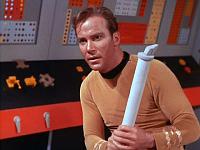
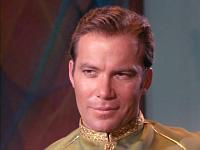
Or rather, made, as in past tense. It’s a sad fact of life for those of us who grew up on Star Trek, that the franchise just, well, sucks. There’s been so much water under the bridge, it might seem borderline apostasy to say this in public, but it’s the truth: I remember when Trek was cool. Hell, I remember when Captain Kirk was still the coolest hombre in the galaxy and it wasn’t an act tantamount to social suicide to admit that, yes, I Grokked Spock.
You see, way back in the day, for those too young to remember, Trek was just the coolest thing going. Captain Kirk and his homies flew around the galaxy and kicked ass, took names, and got laid a lot . . . but honestly, that was just window-dressing. There was something here that appealed to the nation’s pioneer spirit. There was some serious political and social commentary, and not just wussy crap either – they weren’t afraid to tackle racism, sexism, the Cold War – it was all fair game. Everyone knows that Gene Roddenberry famously described Trek as “Wagon Train in space” – but it was a westward expansion without manifest destiny, with white hats and black hats but most importantly with a Prime Directive and an underlying sense of moral decency. I can think of many, many worse messages to send in an action-adventure series aimed at young adults. In fact, many of those worse messages are being broadcast through our airwaves on a daily basis.
The problems started, not with the movies, but with Star Trek: The Next Generation. Yes, it was cool – at least in the beginning – but it was hard to avoid the fact that this was the science-fiction equivalent of perestroika. Sure, if you actually lived in the Federation, it was probably a lot better without hordes of rampaging Klingons, but from the standpoint of the viewer, just how fun was it to watch the adventures of a Starship Enterprise that funcitoned as a medium-sized city, with children underfoot and day-care centers? How many episodes featured the Enterprise shuffling diplomats to peace conferences? What about all those interminably asinine holodeck episodes?

I can’t impugn their motivations in wanting to present an optimistic future. But I also cannot forgive them for turning one of the coolest action series in history into a eunuch. There’s a reason why people liked the episodes that featured implacable nemeses like Q or the Borg a lot better than any in the seemingly endless series of Klingon political maneuvers or – gasp! – Romulan intrigues.
Star Trek: Deep Space Nine made up for a lot of TNG’s sins. The fact that DS9 seemed hatched from a far more cynical and realpolitik viewpoint than any of the previous Treks no doubt helped in the matter. But still, the damage was done - Star Trek had essentially been PC’ed to death by Roddenberry’s own insistence on non-violent conflict throughout the shows early days and by the succession of mealy-mouthed corporate bean-counters – led by Mr. Rick Berman – who tore the last vestiges of cool from the fading brand. Voyager was a transparent attempt to win back the dynamic thrust of the original series, but the wan characters and woefully uneven writing doomed it. And in all honesty I still haven’t seen an episode of Enterprise. Ten years ago I loved Trek, but now I turn the channel when it comes on.
When Warren Ellis says he hates Trek, I deeply suspect that he hates everything Trek has become, everything it signifies in terms of genre fiction and the wider cultural context. But “Switchblade Honey” tells me that Ellis is perhaps the best possible choice in all the entertainment industry to try and revitalize the actual Trek brand. Whether he knows it or not, he seems to understand instinctively just why Trek was cool. Someone at Paramount needs to give him a huge pile of money to make Trek new again.
Is it a great piece of graphic literature? Hell no. It’s basically the OGN equivalent of an old-school pulp novel: fast, cheap and out of control. The art, by Mr. Brandon McKinney, is tolerable, the kind of fast crap you expect to see in something like 2000 AD. It’s the kind of crap that makes a virtue of its’ craptitude. You aren’t really tempted to linger over any of the pages to stare at the beautifully rendered details – fuck that shit. You don’t want to stick around on any page too long, anyway, or the plot holes will eat you alive. What you want to do is burn through this sucker as fast as you can, because it seems to have no real purpose than to climb into your brain and self-destruct. It’s a good thing.
The set-up for this story is remarkably simple. Basically, instead of having achieved a Trek-like utopia, mankind has reached the stars with all our evil intact. We’ve made first contact with an alien race called the Chasta, who we kind of, um, butchered and ate. But they were really a super-intelligent hive-mind organism with the means and the motive to eradicate entire species from the universe. They’ve just about succeeded with the human race, too. Enter our heroes.

The crew of the Switchblade Honey is pulled from the dregs of an intergalactic prison. You know them, they’re the kind of malcontents who are usually drafted for suicide missions of these sorts. They are sent into the galactic wilderness to begin a campaign of guerilla warfare.
Interestingly, despite proclivities for violence and slight anti-social tendencies, the one unifying factor for all the crewmen is their rigid decency. Many of them were imprisoned for failing to comply with morally despicable orders – abandoning comrades, firing on civilians and the like. The future space military in “Honey” seems just as situationally amoral as our own. (Before you interpret that in any way shape or form as a blanket condemnation of our own fighting forces, remember that my wife is a ten-year veteran of the US Air Force. But I’m also a student of history and I know that in every war there are atrocities and America has committed more than our fair share –those are just the facts of life.) This seems less a condemnation of Trek than military thinking in general, and in fact, it does a good job of highlighting just why Trek was so wonderfully, naively optimistic.

At the end of the day, the crew of the Switchblade Honey may seem rough & tumble because they smoke and drink, but it’s less a condemnation of Trek’s rampant PC than an examination of where exactly Trek went wrong. There’s excitement, urgency and a more than a little sex appeal (I mean, really, low cut skintight space blouses?) You’ve got fiendish alien foes and improbably high-tech wizardry. You’ve also got your fair share of plot holes and deus ex machina devices, but, truthfully, many less than you’d get from your average space opera movie. At the end of the day it’s just a damn satisfying read. I want to find out what happens next, and that’s about the best compliment I can possibly imagine in this day and age. Not bad for a “cheap joke.”
Considering the circumstances, I think this was a much more successful project than “Orbiter.” It’s true that under the gruff exterior of every cynic you’ll find the pink and bleeding heart of an idealist, and “Orbiter” was little more than a mash-note to manned space exploration. I agreed with the sentiment but I strongly disapproved of the treacle. “Switchblade Honey” manages to make that same point with considerably less narrative ballast. I paid $25 for “Orbiter” and “Switchblade Honey” cost $9.95 – I don’t have to tell you which is the better bargain.

The same idealism that Ellis holds close to his heart for space exploration is the very same idealism that fueled Trek way back when. Back before the galaxy was colonized, when it was still a rough and tumble place full of Klingons and Gorns and impossible space gangsters. Ryder, Ellis’ obligatory tough-as-nails maverick, even makes a speech towards the end of the book that could have easily come out of James T. Kirk’s Logbook:
”I joined the Navy because I wanted to explore. I wanted to Captain a starship and say, we don’t know what’s over there. Let’s go that way.” (Emphasis mine)
Ultimately, “Switchblade Honey” is a sight for these sore eyes. I’m sorry – you can go on all day about Farscape and Babylon 5 and freakin’ Stargate SG-1, but when it comes to space opera I still have a soft spot for the classics. Give me Dr. Who, give me Planet of the Apes and Silent Running and The Outer Limits (the old, good, series).
I’d buy a new volume of “Switchblade Honey” in a heartbeat.
"DON'T FUCK WITH ME"
Sunday, April 11, 2004
Notable Links for 04/12
Well, did everybody have a happy Easter? Um, did you actually know it was Easter? If you're not Church-going folk, it's easy to overlook these things.
So, if you care, here's about the cutest Easter-related link you're likely to see. Don't blame me if you find it annoying.
Anyway, was that a tournament or what? I've been rooting for Phil to win himself a Major for years now, and for him to do it in Augusta, under such spectacular circumstances... wow. It reminds me why I love watching golf so much. Don't play it, but I watch it. Don't really pay attention to any other sport, either, but I do love me the golf.
* Well, I'll be damned. The rumors were true - "Powers" and "Kabuki" have jumped the good ship Image and have made their way to Marvel. Of course, they're not calling it Epic anymore, because in all honesty they'd be idiots to do that. Epic has twenty-five years' worth of baggage that they don't want to have to carry. It's called Icon - which I guess is as good a name as any. Perhaps not as good a name as "Captain Joey's Fun Time Four-Color Extravaganza," but what is? Anyway, read all about the sense-shattering revelations, including comments from all the major players, here (courtesy of Newsarama), here (courtesy of Comic Book Resources), or here (courtesy of The Pulse). It's all essentially the same story, but I don't want to leave anyone out. Meanwhile, Sean T. Collins has some of the best commentary on the announcement here.
In any event, someone really should point out to them that Icon is hardly the first time Marvel has offered complete creator ownership - last I looked, "Groo," "Elfquest," "Moonshadow," and "The Airtight Garage" were all still owned by Aragones, WaRP, Dematteis & Muth and Mobius, respectively. Hell, "Groo" has practically had more publishers than Alan Moore has hairs on his head.
But I am not going to be one of those who predicts Icon's quick demise. The fact is, Marvel is in the business of making money, and they wouldn't risk something like this so soon after the Epic V.2 fiasco if there wasn't an ironclad financial reasons for doing so. If they do it right, it'll work - and I'll be surprised if "Powers" doesn't at least double its' orders. That's a pretty cynical thing to say, I know, but that's the sorry state of this industry right now. Bendis and Mack aren't dumb.
* Also courtesy of the Pulse, we have confirmation of long-standing allegations made by "Dirty" Danny Hellman over at the Comicon boards that a recently terminated employee was fired for embezzlement. (The original allegation was made here.) Other than confirmation by Journal editor Dirk Deppey that the ex-employee in question was not Milo George, the alleged embezzler's identity remains unknown. Hmmm. Don't know what to think of this one - is it news or is it private? Well, that's a tough call. I imagine the answer to this question can only be found in the coming weeks - is anyone going to rise to the challenge and investigate this story? If not, we have no-one's word on the issue but Fantagraphics employees. Just on the surface of it there doesn't look to be much of a story - someone steals, they get caught and fired. Happens in business all over the country every day. But until and unless we know how much was stolen and by whom, it's basically a non-issue - empty speculation. It's not the Journal's job to open up potential litigation for the parent company (even though they've done that more than a few times over the years), so I imagine they won't write about it until the legal precedings are over and done, if ever.
Would we like to know what happened? Yes, the human desire for gossip is strong and sometimes overpowers common sense. But... do we need to know? Unless this impacts or has impacted parties outside of Fanta, I don't think so. But that's just my opinion, and I am a frequent contributor to the Journal and by extension a freelance Fantagraphics employee ('cause Gary Groth signs my checks!), so take that as you will.
* "For those who till now could only lust after the latest comic books brought in by “foreign” friends or cousins — be it the superheroes or funnies like MAD — can take a look around and see the local scene looking far brighter and better now. In the recent past, new titles from across popular labels such as DC and Marvel have been available at the neighbourhood newspaper and magazine shop every month, and often as soon as they are published abroad. All thanks to a small company quietly working away in its offices in Bangalore. Gotham Comics, a US-based company, has done a little more than revolutionise the Indian comics market, offering affordable comic books without compromising on production quality." Read more here, courtesy of the Calcutta Telegraph.
* "The increasing popularity of computer-generated animation hasn't erased the demand for animators skilled in the art of hand-drawn images. There are still jobs for recruits as nimble with a Macintosh as they are with a pencil. To prepare students for computer-driven work and keep them rooted in the traditional world of 'Snow White and the Seven Dwarfs' and 'Beauty and the Beast,' colleges are making sure they stay sharp in both techniques." Read more here, courtesy of the LA Daily News.
* Remember that Seth interview I linked to last week, from the Toronto Eye? Well, if you want to read an uncut transcript of that discussion, this is your lucky day. Link courtesy of The Cultural Gutter, via Sequential.
* Comic World News has a chat with David Yurkovich here, and has a look at Alternative Comics' output here.
* "Comic books are like wine. You can pick up a bottle at your local grocery store and trade expertise for price and convenience, or you can go to a wine or liquor store and become an oenophile. Drinkers of wine fall into three categories: those who like a glass of wine every now and then but don't really care about vintage, those who drink it socially and decide to cultivate their knowledge without being obsessive, and those who are introduced to fine wine by an oenophile and are seduced into the hobby." Torsten Adair speaks out on the recent retailer shuffles here, courtesy of ICV2.
* Over at Ninth Art, Alasdair Watson takes a look at the "baffling" phenomenon of talented indie creators abandoning their indie dreams to go play in the Big Two's sandboxes as soon as they possibly can here. It's just a fact of life - the American comics industry is a cesspool of stunted ambition. This surprises anyone? (Of course, this is not to say that I wouldn't write for either of the Big Two in a heartbeat, because I would, and anyone who isn't independently wealthy who tells you otherwise is L-Y-I-N-G...)
* Wow. The orders for "Conan" #4 were bigger than the orders for issue #1. That's, um, amazing. It's also similarly amazing - albeit in a depressing way - that that's so amazing to begin with. What an industry! Read more here, courtesy of ICV2.
* The always-interesting (yes, even when he's writing about all those stupid X-books) Paul O'Brien delivers about the best postmortem of the "American Power" fiasco that I have yet seen here, courtesy of Ninth Art.
* "Public Square Books has joined forces with Norma Editorial of Spain to bring a diverse collection of Spanish Language Graphic Novels to American shores for the first time. Public Square will release the first titles to major retailers and wholesalers nationwide in May 2004. Ten to fifteen new selections will follow each month. The publishing program features a wide assortment of books for children, young adults, andmature audiences. Book buyers will be able to choose from many different genres-- from sci-fi to crime noir, anime to autobiography. Monthly selections also include Spanish language versions of acclaimed and popular American series such as Hellboy and Sin City, previously unavailable in the United States... The capacity of popular comics to expand into other markets, such as the film and gaming industries, in combination with an explosion of fanzines on the world wide web, has created an unprecedented demand for graphic novels in bookstores today. Public Square and Norma Editorial seek to further this trend by reaching out to an under-served U.S. Hispanic readership." Read more here. (Link courtesy of Artbomb.)
* Courtesy of the Journal board, we have news that veteran cartoonist Carol Lay is in dire financial trouble and is having a fire - er - divorce sale over at her web site (and her store is here). She says it's 20% off everything. If I had some dough, I'd be all over that, because she has long been one of my favorites... plus I have had relatives in such dire straits, so I definitely feel her pain. As it is, I am poor, but I can certainly beseech you to go give her a helping hand, can't I?
* Courtesy of Shawn Fumo at Worlds Within Worlds, we have news of Dark Horse Comics' recent acquisition: editor Carl Horn. Read about it here, courtesy of Anime News Network.
* "It doesn't sound all that exciting: another college student writing about Homer's odyssey - until you realize this trip ends not with Penelope in Ithaca, but with Apu at the Kwik-E-Mart. Credit Steven Keslowitz, a Brooklyn College sophomore who turned his Sunday night obsession with 'The Simpsons' into a scholarly study of the Springfield scene, ruminating on subjects from Bart's bad boy persona to Marge's towering 'do." Read more here, courtesy of the Ocala Star-Banner (link via Thought Balloons).
* "You’d have had to be watching closely to see Gettosake’s rise over the past few years. This year, however, you’d be hard-pressed to miss them. A studio specializing in 'urban style animation, comics and illustration,' Gettosake is made up of three brothers, Jeremy, Maurice and Robert Love. 'We’re a bunch of self taught artists and animators, who decided to put our talent to good use five years ago,' Jeremy told Newsarama. 'We were frustrated with the lack of diversity in mainstream comics and animation at the time so instead of griping, we decided to do something about it. It's been a long road, but I think we are only just now ‘Ready for our close up.’ We actually started out on the film/tv side moreso than comics. It was only last year when we took the plunge into this crazy industry. Now that we're here we plan on staying for a while.'" Read more here, courtesy of Newsarama.
* Johanna Draper Carlson has updated her Comics Worth Reading site with a slew of new reviews. Ms. Carlson takes a close look at Myatt Murphy & Scott Dalrymple's "Fade From Blue," has another go at the latest issue of Tom Beland's "True Story, Swear To God," in addition to reviews of various and sundry books from DC, Image and a few indies for good measure.
Flip over to her Image reviews to read her take on "PVP" #6 - the issue that reprints the infamous "Grafimaximo" sequence. I'm tempted to just reprint the whol critique since its so spot-on, but I will refrain and merely reprint this key passage:
"I shouldn't be surprised that he suspects criticism of his work must be a personal attack, since that's what he's dishing out under the guise of parody. When that's all someone's capable of in terms of criticism, that's the filter through which they view responses as well."
Great, great stuff. I really have to wonder why someone like James Kochalka felt the need to legitimize this jackass by giving him a cover. Oh well.
* Also courtesy of Ms. Carlson, we have Matt Madden's web site. I don't know if you've ever been there, but I found it pretty interesting myself.
* "In cosplay, short for costume play, fans dress up as their favourite characters from Japanese animation (anime), Hong Kong comics, video games and even Hollywood movies. They parade around in their fancy costumes and have their pictures taken. This activity, which started in Japan more than 10 years ago, has attracted many loyal enthusiasts in Singapore, Hong Kong and even the United States." See, where I come from we call that LAME. I remember when I lived in Northern CA and every Friday the vampire/goth kids used to run around the Ashland park and play their live-action "Vampire" games, and it just seems so... well, did I already say lame? Sigh. Read about it here, courtesy of the Straits Times.
* Hokey Smokes, Bullwinkle! Jim Henley actually does some comics blogging! He's got some nice capsule reviews of the latesy "Queen & Country" volume, in addition to the latest issues of "My Faith in Frankie," "Batman: Death And The Maidens," and a few others.
* The San Francisco Chronicle reviews two new DC/Vertigo OGN's - "Lovecraft" and "It's A Bird..." here.
* Ninth Art takes a look back at "Marvels" here - man, has it really been ten years already? I feel old.
* MIT takes a gander at the recent "X-Statix" storyline, "Back From The Dead," here - and somehow isn't horribly disgusted.
* Shawn Fumo tries out Hellboy here. Does he like it? Stay tuned!
* Rick at Eat More People writes some reviews here, of comics such as "Batman," "Hellblazer," and "Demo."
* Johnny Bacardi continues the Blogosphere-wide focus on AiT/Planet Lar here, with looks at "Last of the Independents," 'Codeflesh," and the "Couriers" trilogy. Pop Culture Gadabout takes a look at that selfsame "Couriers" triology here.
Huh.
You know, it just occurred to me that I don't want to do this anymore. Every day I sit here and spend anywhere from 4-8 hours every night putting together all these links... and it has occurred to me that I don't need to do this anymore. I don't get paid to do this. There's all sorts of wonderful people out there who post the news, to the point where this job has become filtering through all the other blogs to find all of their news. But really, I don't have to do that for you anymore.
When Dirk Deppey quit doing Journalista - er, put it on hiatus - I stepped in to start doing this daily linkblogging for a number of reasons. First and foremost: I felt that Journalista delivered an important public service to the comics world by assembling all the interesting and noteworthy material of the day - not just whomever is inking "Green Lantern" this month. He was not the first comics blogger but he was perhaps the best, and his example showed me that this whole thing isn't just a lark, that it isn't just a fan forum, it's an actual, living breathing community that needed to start acting in a responsible and conscientious manner. This means taking the plight of international cartoonists seriously, this means taking the defense of our own (for us Americans) First Amendment seriously - it means being aware of good work both in and outside the mainstream (for those more inclined to spandex), and being open to work both in and outside the indie spectrum (for those more inclined to the indie).
I believe very firmly in the stated goals of the Comics Journal as a guiding principle for my appreciation to the comics medium. Reading my first issue of the Journal changed my life, considering what a big part of my life comics were and remain. To this day, there is no excitement equal to getting a brand new issue of the Journal in the mail - there's always the possibility that there will be something inside that will totally uproot every established notion you've ever cherished about the industry and the artform. I refuse to approach comics in anything other than a rigorously critical but absolutely open-minded fashion. My prejudices exist to be demolished.
And I must reiterate: the Comics Blogosphere doesn't need me to do this anymore. Truth be told, I don't even know if we still need Journalista. The Blogosphere, aided primarily by this site here, has come into its own and reached something of a critical mass these past few months. More people are taking blogging more seriously, and they are blogging about a more varied and diverse set of issues than ever before. It's gotten to the point where the blogosphere is recognized as a legitimate, albeit proportionately small, force within the industry - or why else would Larry Young be giving away thousands of dollars worth of books in an attempt to garner some good word-of-mouth on the internet?
So, the long and short of it is: The Hurting is not going to be spending 4-8 hours every night doing this for free anymore. I just don't want to do it, plain and simple. I am adequately satisfied that I can do it - it was a big challenge and I think I met it pretty well. But in all seriousness, I've achieved my goals. The Blogosphere has reached the point where my not linkblogging is hardly going to make a difference for good or evil - it would be the height of egotism to say anything different. I've gotten my name out there a fair bit - I think it's fair to say that more people know who I am now than when I began. Hopefully I'll be able to capitalize on this and continue to gain momentum in my real job, that is, writing. And one of the biggest reasons I'm pulling the plug on the exhaustive linking is that I just don't have any time to do the real writing anymore. That's my job, even if I don't get paid too well for that, either. Plain and simple, I appreciate the positive feedback, but this isn't my job, and it's starting to take a toll on the quality of my life.
I'm not going to stop blogging. Travels With Larry will continue for the foreseeable future - I've still got a lot of AiT/Planet Lar books to wade through. Hopefully I will continue to receive books from people and publishers who want to receive a fair and balanced appraisal of their work (that wasn't a satirical jab at the Fox network, BTW, just a coincidence). I will continue to comment on whatever strikes my fancy. But I don't need - don't want - don't have to do all of this anymore, so I'm not going to.
Simple as that. Thanks for your patronage. If you like what I've done, there's a tip jar at the top.
Send me your thoughts, people.

Travels With Larry Part IV
Abel
I really wish I could say that “Abel” was a better book. It’s clearly a deeply felt work on the part or both creators, but it never achieves the artistic critical mass that separates the mediocre and the good.
There’s a lot going on here – perhaps too much for a single graphic novel of roughly 100 pages. It starts with a dead dog and ends with a lynching. In between we have rape, murder, slavery, incest and certain sociopathic tendencies. “Abel” is an unremittingly grim book, the kind of book that leaves you exhausted when you’re done. But it’s not the good kind of exhaustion, the buzz that you get from an exhilarating fictional experience, it’s merely the low buzzing fatigue of abuse.
William Harms has a keen grasp of the distended rhythms of life in the rural Midwest. None of the incidents in the story ring particularly false, but the narrative nevertheless staggers. The protagonist, twelve-year old John, is remarkably unsympathetic considering the repeated tragedies visited on him. It’s hard to be a sensitive boy growing up in harsh farm country, that much is understood. But it’s hard to sympathize with someone who seems to possess a clear understanding of good and evil but who fails to act according to his conscience, only according to his fear.
John has the chance to stand up and do the right thing twice in the course of the story. He doesn’t, not in the beginning when the dog is murdered and not at the end when his brother (accompanied by friends) rapes and murders a mentally retarded girl, and a local Chinese immigrant is lynched for the crime. Of course, his brother Philip is a budding sociopath, and of course, John is the only person who is fully aware of the length and breadth of his depredations. To belabor the biblical metaphor, Philip’s evil is the cross John has to bear.
I’ve received enough rejection letters to know that editors hate passive protagonists, and there’s a good reason for this: unless you’re Ralph Ellison, the reader wants to reach into the book and slap them. Life is depressing, yes, but art that merely recreates the surface sheen of misery that blankets existence, without offering any insight into the depths of feeling that motivates people to continue living, is callow and juvenile. People go on with their lives despite the constant presence of tragedy, and it is this phenomenon that captivates human nature, not the mere recitation of tragedy itself.
Mark Bloodworth is a perfectly competent artist, clearly capable but equally unprepared for the challenges of working in black and white (or, as is the case of “Abel,” dark sepia and white). He uses too many lines and has an uncertain grasp of the physical form. His faces and legs are sometimes vague and insubstantial. The kind of tightly rendered ink-brush hatching that Bloodworth employs without fail seems a cranky holdover from the mid-90’s, when dozens of comic book artists tried unsuccessfully to adopt the busy sheen of Image’s trademark textures. It usually doesn’t work in black and white, and it doesn’t work here. The inconsistencies of the line weight are equally distracting. Oddly, Bloodworth has a much keener grasp on the intricacies of architecture and landscaping – the type of details which usually elude comic book artists.
It would be wrong to say that “Abel” is a bad book. It definitely shows promise on a number of levels.. Ultimately, it’s just not a significant enough narrative to be truly disappointing. It’s a trifle. I look forward to reading anything either Harms or Bloodworth attempt from here on out. These creators will either build on the experience of producing it and make their next effort better, or not. The choice is theirs to make.
Well, did everybody have a happy Easter? Um, did you actually know it was Easter? If you're not Church-going folk, it's easy to overlook these things.
So, if you care, here's about the cutest Easter-related link you're likely to see. Don't blame me if you find it annoying.
Anyway, was that a tournament or what? I've been rooting for Phil to win himself a Major for years now, and for him to do it in Augusta, under such spectacular circumstances... wow. It reminds me why I love watching golf so much. Don't play it, but I watch it. Don't really pay attention to any other sport, either, but I do love me the golf.
* Well, I'll be damned. The rumors were true - "Powers" and "Kabuki" have jumped the good ship Image and have made their way to Marvel. Of course, they're not calling it Epic anymore, because in all honesty they'd be idiots to do that. Epic has twenty-five years' worth of baggage that they don't want to have to carry. It's called Icon - which I guess is as good a name as any. Perhaps not as good a name as "Captain Joey's Fun Time Four-Color Extravaganza," but what is? Anyway, read all about the sense-shattering revelations, including comments from all the major players, here (courtesy of Newsarama), here (courtesy of Comic Book Resources), or here (courtesy of The Pulse). It's all essentially the same story, but I don't want to leave anyone out. Meanwhile, Sean T. Collins has some of the best commentary on the announcement here.
In any event, someone really should point out to them that Icon is hardly the first time Marvel has offered complete creator ownership - last I looked, "Groo," "Elfquest," "Moonshadow," and "The Airtight Garage" were all still owned by Aragones, WaRP, Dematteis & Muth and Mobius, respectively. Hell, "Groo" has practically had more publishers than Alan Moore has hairs on his head.
But I am not going to be one of those who predicts Icon's quick demise. The fact is, Marvel is in the business of making money, and they wouldn't risk something like this so soon after the Epic V.2 fiasco if there wasn't an ironclad financial reasons for doing so. If they do it right, it'll work - and I'll be surprised if "Powers" doesn't at least double its' orders. That's a pretty cynical thing to say, I know, but that's the sorry state of this industry right now. Bendis and Mack aren't dumb.
* Also courtesy of the Pulse, we have confirmation of long-standing allegations made by "Dirty" Danny Hellman over at the Comicon boards that a recently terminated employee was fired for embezzlement. (The original allegation was made here.) Other than confirmation by Journal editor Dirk Deppey that the ex-employee in question was not Milo George, the alleged embezzler's identity remains unknown. Hmmm. Don't know what to think of this one - is it news or is it private? Well, that's a tough call. I imagine the answer to this question can only be found in the coming weeks - is anyone going to rise to the challenge and investigate this story? If not, we have no-one's word on the issue but Fantagraphics employees. Just on the surface of it there doesn't look to be much of a story - someone steals, they get caught and fired. Happens in business all over the country every day. But until and unless we know how much was stolen and by whom, it's basically a non-issue - empty speculation. It's not the Journal's job to open up potential litigation for the parent company (even though they've done that more than a few times over the years), so I imagine they won't write about it until the legal precedings are over and done, if ever.
Would we like to know what happened? Yes, the human desire for gossip is strong and sometimes overpowers common sense. But... do we need to know? Unless this impacts or has impacted parties outside of Fanta, I don't think so. But that's just my opinion, and I am a frequent contributor to the Journal and by extension a freelance Fantagraphics employee ('cause Gary Groth signs my checks!), so take that as you will.
* "For those who till now could only lust after the latest comic books brought in by “foreign” friends or cousins — be it the superheroes or funnies like MAD — can take a look around and see the local scene looking far brighter and better now. In the recent past, new titles from across popular labels such as DC and Marvel have been available at the neighbourhood newspaper and magazine shop every month, and often as soon as they are published abroad. All thanks to a small company quietly working away in its offices in Bangalore. Gotham Comics, a US-based company, has done a little more than revolutionise the Indian comics market, offering affordable comic books without compromising on production quality." Read more here, courtesy of the Calcutta Telegraph.
* "The increasing popularity of computer-generated animation hasn't erased the demand for animators skilled in the art of hand-drawn images. There are still jobs for recruits as nimble with a Macintosh as they are with a pencil. To prepare students for computer-driven work and keep them rooted in the traditional world of 'Snow White and the Seven Dwarfs' and 'Beauty and the Beast,' colleges are making sure they stay sharp in both techniques." Read more here, courtesy of the LA Daily News.
* Remember that Seth interview I linked to last week, from the Toronto Eye? Well, if you want to read an uncut transcript of that discussion, this is your lucky day. Link courtesy of The Cultural Gutter, via Sequential.
* Comic World News has a chat with David Yurkovich here, and has a look at Alternative Comics' output here.
* "Comic books are like wine. You can pick up a bottle at your local grocery store and trade expertise for price and convenience, or you can go to a wine or liquor store and become an oenophile. Drinkers of wine fall into three categories: those who like a glass of wine every now and then but don't really care about vintage, those who drink it socially and decide to cultivate their knowledge without being obsessive, and those who are introduced to fine wine by an oenophile and are seduced into the hobby." Torsten Adair speaks out on the recent retailer shuffles here, courtesy of ICV2.
* Over at Ninth Art, Alasdair Watson takes a look at the "baffling" phenomenon of talented indie creators abandoning their indie dreams to go play in the Big Two's sandboxes as soon as they possibly can here. It's just a fact of life - the American comics industry is a cesspool of stunted ambition. This surprises anyone? (Of course, this is not to say that I wouldn't write for either of the Big Two in a heartbeat, because I would, and anyone who isn't independently wealthy who tells you otherwise is L-Y-I-N-G...)
* Wow. The orders for "Conan" #4 were bigger than the orders for issue #1. That's, um, amazing. It's also similarly amazing - albeit in a depressing way - that that's so amazing to begin with. What an industry! Read more here, courtesy of ICV2.
* The always-interesting (yes, even when he's writing about all those stupid X-books) Paul O'Brien delivers about the best postmortem of the "American Power" fiasco that I have yet seen here, courtesy of Ninth Art.
* "Public Square Books has joined forces with Norma Editorial of Spain to bring a diverse collection of Spanish Language Graphic Novels to American shores for the first time. Public Square will release the first titles to major retailers and wholesalers nationwide in May 2004. Ten to fifteen new selections will follow each month. The publishing program features a wide assortment of books for children, young adults, andmature audiences. Book buyers will be able to choose from many different genres-- from sci-fi to crime noir, anime to autobiography. Monthly selections also include Spanish language versions of acclaimed and popular American series such as Hellboy and Sin City, previously unavailable in the United States... The capacity of popular comics to expand into other markets, such as the film and gaming industries, in combination with an explosion of fanzines on the world wide web, has created an unprecedented demand for graphic novels in bookstores today. Public Square and Norma Editorial seek to further this trend by reaching out to an under-served U.S. Hispanic readership." Read more here. (Link courtesy of Artbomb.)
* Courtesy of the Journal board, we have news that veteran cartoonist Carol Lay is in dire financial trouble and is having a fire - er - divorce sale over at her web site (and her store is here). She says it's 20% off everything. If I had some dough, I'd be all over that, because she has long been one of my favorites... plus I have had relatives in such dire straits, so I definitely feel her pain. As it is, I am poor, but I can certainly beseech you to go give her a helping hand, can't I?
* Courtesy of Shawn Fumo at Worlds Within Worlds, we have news of Dark Horse Comics' recent acquisition: editor Carl Horn. Read about it here, courtesy of Anime News Network.
* "It doesn't sound all that exciting: another college student writing about Homer's odyssey - until you realize this trip ends not with Penelope in Ithaca, but with Apu at the Kwik-E-Mart. Credit Steven Keslowitz, a Brooklyn College sophomore who turned his Sunday night obsession with 'The Simpsons' into a scholarly study of the Springfield scene, ruminating on subjects from Bart's bad boy persona to Marge's towering 'do." Read more here, courtesy of the Ocala Star-Banner (link via Thought Balloons).
* "You’d have had to be watching closely to see Gettosake’s rise over the past few years. This year, however, you’d be hard-pressed to miss them. A studio specializing in 'urban style animation, comics and illustration,' Gettosake is made up of three brothers, Jeremy, Maurice and Robert Love. 'We’re a bunch of self taught artists and animators, who decided to put our talent to good use five years ago,' Jeremy told Newsarama. 'We were frustrated with the lack of diversity in mainstream comics and animation at the time so instead of griping, we decided to do something about it. It's been a long road, but I think we are only just now ‘Ready for our close up.’ We actually started out on the film/tv side moreso than comics. It was only last year when we took the plunge into this crazy industry. Now that we're here we plan on staying for a while.'" Read more here, courtesy of Newsarama.
* Johanna Draper Carlson has updated her Comics Worth Reading site with a slew of new reviews. Ms. Carlson takes a close look at Myatt Murphy & Scott Dalrymple's "Fade From Blue," has another go at the latest issue of Tom Beland's "True Story, Swear To God," in addition to reviews of various and sundry books from DC, Image and a few indies for good measure.
Flip over to her Image reviews to read her take on "PVP" #6 - the issue that reprints the infamous "Grafimaximo" sequence. I'm tempted to just reprint the whol critique since its so spot-on, but I will refrain and merely reprint this key passage:
"I shouldn't be surprised that he suspects criticism of his work must be a personal attack, since that's what he's dishing out under the guise of parody. When that's all someone's capable of in terms of criticism, that's the filter through which they view responses as well."
Great, great stuff. I really have to wonder why someone like James Kochalka felt the need to legitimize this jackass by giving him a cover. Oh well.
* Also courtesy of Ms. Carlson, we have Matt Madden's web site. I don't know if you've ever been there, but I found it pretty interesting myself.
* "In cosplay, short for costume play, fans dress up as their favourite characters from Japanese animation (anime), Hong Kong comics, video games and even Hollywood movies. They parade around in their fancy costumes and have their pictures taken. This activity, which started in Japan more than 10 years ago, has attracted many loyal enthusiasts in Singapore, Hong Kong and even the United States." See, where I come from we call that LAME. I remember when I lived in Northern CA and every Friday the vampire/goth kids used to run around the Ashland park and play their live-action "Vampire" games, and it just seems so... well, did I already say lame? Sigh. Read about it here, courtesy of the Straits Times.
* Hokey Smokes, Bullwinkle! Jim Henley actually does some comics blogging! He's got some nice capsule reviews of the latesy "Queen & Country" volume, in addition to the latest issues of "My Faith in Frankie," "Batman: Death And The Maidens," and a few others.
* The San Francisco Chronicle reviews two new DC/Vertigo OGN's - "Lovecraft" and "It's A Bird..." here.
* Ninth Art takes a look back at "Marvels" here - man, has it really been ten years already? I feel old.
* MIT takes a gander at the recent "X-Statix" storyline, "Back From The Dead," here - and somehow isn't horribly disgusted.
* Shawn Fumo tries out Hellboy here. Does he like it? Stay tuned!
* Rick at Eat More People writes some reviews here, of comics such as "Batman," "Hellblazer," and "Demo."
* Johnny Bacardi continues the Blogosphere-wide focus on AiT/Planet Lar here, with looks at "Last of the Independents," 'Codeflesh," and the "Couriers" trilogy. Pop Culture Gadabout takes a look at that selfsame "Couriers" triology here.
Huh.
You know, it just occurred to me that I don't want to do this anymore. Every day I sit here and spend anywhere from 4-8 hours every night putting together all these links... and it has occurred to me that I don't need to do this anymore. I don't get paid to do this. There's all sorts of wonderful people out there who post the news, to the point where this job has become filtering through all the other blogs to find all of their news. But really, I don't have to do that for you anymore.
When Dirk Deppey quit doing Journalista - er, put it on hiatus - I stepped in to start doing this daily linkblogging for a number of reasons. First and foremost: I felt that Journalista delivered an important public service to the comics world by assembling all the interesting and noteworthy material of the day - not just whomever is inking "Green Lantern" this month. He was not the first comics blogger but he was perhaps the best, and his example showed me that this whole thing isn't just a lark, that it isn't just a fan forum, it's an actual, living breathing community that needed to start acting in a responsible and conscientious manner. This means taking the plight of international cartoonists seriously, this means taking the defense of our own (for us Americans) First Amendment seriously - it means being aware of good work both in and outside the mainstream (for those more inclined to spandex), and being open to work both in and outside the indie spectrum (for those more inclined to the indie).
I believe very firmly in the stated goals of the Comics Journal as a guiding principle for my appreciation to the comics medium. Reading my first issue of the Journal changed my life, considering what a big part of my life comics were and remain. To this day, there is no excitement equal to getting a brand new issue of the Journal in the mail - there's always the possibility that there will be something inside that will totally uproot every established notion you've ever cherished about the industry and the artform. I refuse to approach comics in anything other than a rigorously critical but absolutely open-minded fashion. My prejudices exist to be demolished.
And I must reiterate: the Comics Blogosphere doesn't need me to do this anymore. Truth be told, I don't even know if we still need Journalista. The Blogosphere, aided primarily by this site here, has come into its own and reached something of a critical mass these past few months. More people are taking blogging more seriously, and they are blogging about a more varied and diverse set of issues than ever before. It's gotten to the point where the blogosphere is recognized as a legitimate, albeit proportionately small, force within the industry - or why else would Larry Young be giving away thousands of dollars worth of books in an attempt to garner some good word-of-mouth on the internet?
So, the long and short of it is: The Hurting is not going to be spending 4-8 hours every night doing this for free anymore. I just don't want to do it, plain and simple. I am adequately satisfied that I can do it - it was a big challenge and I think I met it pretty well. But in all seriousness, I've achieved my goals. The Blogosphere has reached the point where my not linkblogging is hardly going to make a difference for good or evil - it would be the height of egotism to say anything different. I've gotten my name out there a fair bit - I think it's fair to say that more people know who I am now than when I began. Hopefully I'll be able to capitalize on this and continue to gain momentum in my real job, that is, writing. And one of the biggest reasons I'm pulling the plug on the exhaustive linking is that I just don't have any time to do the real writing anymore. That's my job, even if I don't get paid too well for that, either. Plain and simple, I appreciate the positive feedback, but this isn't my job, and it's starting to take a toll on the quality of my life.
I'm not going to stop blogging. Travels With Larry will continue for the foreseeable future - I've still got a lot of AiT/Planet Lar books to wade through. Hopefully I will continue to receive books from people and publishers who want to receive a fair and balanced appraisal of their work (that wasn't a satirical jab at the Fox network, BTW, just a coincidence). I will continue to comment on whatever strikes my fancy. But I don't need - don't want - don't have to do all of this anymore, so I'm not going to.
Simple as that. Thanks for your patronage. If you like what I've done, there's a tip jar at the top.
Send me your thoughts, people.
Travels With Larry Part IV
Abel
I really wish I could say that “Abel” was a better book. It’s clearly a deeply felt work on the part or both creators, but it never achieves the artistic critical mass that separates the mediocre and the good.
There’s a lot going on here – perhaps too much for a single graphic novel of roughly 100 pages. It starts with a dead dog and ends with a lynching. In between we have rape, murder, slavery, incest and certain sociopathic tendencies. “Abel” is an unremittingly grim book, the kind of book that leaves you exhausted when you’re done. But it’s not the good kind of exhaustion, the buzz that you get from an exhilarating fictional experience, it’s merely the low buzzing fatigue of abuse.
William Harms has a keen grasp of the distended rhythms of life in the rural Midwest. None of the incidents in the story ring particularly false, but the narrative nevertheless staggers. The protagonist, twelve-year old John, is remarkably unsympathetic considering the repeated tragedies visited on him. It’s hard to be a sensitive boy growing up in harsh farm country, that much is understood. But it’s hard to sympathize with someone who seems to possess a clear understanding of good and evil but who fails to act according to his conscience, only according to his fear.
John has the chance to stand up and do the right thing twice in the course of the story. He doesn’t, not in the beginning when the dog is murdered and not at the end when his brother (accompanied by friends) rapes and murders a mentally retarded girl, and a local Chinese immigrant is lynched for the crime. Of course, his brother Philip is a budding sociopath, and of course, John is the only person who is fully aware of the length and breadth of his depredations. To belabor the biblical metaphor, Philip’s evil is the cross John has to bear.
I’ve received enough rejection letters to know that editors hate passive protagonists, and there’s a good reason for this: unless you’re Ralph Ellison, the reader wants to reach into the book and slap them. Life is depressing, yes, but art that merely recreates the surface sheen of misery that blankets existence, without offering any insight into the depths of feeling that motivates people to continue living, is callow and juvenile. People go on with their lives despite the constant presence of tragedy, and it is this phenomenon that captivates human nature, not the mere recitation of tragedy itself.
Mark Bloodworth is a perfectly competent artist, clearly capable but equally unprepared for the challenges of working in black and white (or, as is the case of “Abel,” dark sepia and white). He uses too many lines and has an uncertain grasp of the physical form. His faces and legs are sometimes vague and insubstantial. The kind of tightly rendered ink-brush hatching that Bloodworth employs without fail seems a cranky holdover from the mid-90’s, when dozens of comic book artists tried unsuccessfully to adopt the busy sheen of Image’s trademark textures. It usually doesn’t work in black and white, and it doesn’t work here. The inconsistencies of the line weight are equally distracting. Oddly, Bloodworth has a much keener grasp on the intricacies of architecture and landscaping – the type of details which usually elude comic book artists.
It would be wrong to say that “Abel” is a bad book. It definitely shows promise on a number of levels.. Ultimately, it’s just not a significant enough narrative to be truly disappointing. It’s a trifle. I look forward to reading anything either Harms or Bloodworth attempt from here on out. These creators will either build on the experience of producing it and make their next effort better, or not. The choice is theirs to make.
Friday, April 09, 2004
Notable Links for 04/09
This is getting ridiculous. I seriously need an editor here. It might have just a little something to do with the fact that I usually post these damn things as the sun is coming up, but ultimately that's no excuse.
I remember thinking to myself yesterday evening: "Self, you know, it's really confusing that we have two Daves here in the Comics Blogosphere, one of these days you're going to screw up and get them confused." Boy, was that little voice in the back of my head prophetic. Because - heh - what did I do? I linked to Dave at Intermittent when I said I was linking to David Fiore at Motime Like The Present. That's about the worst thing I can imagine doing, only slightly less bad than linking to Marvel like this.
So, mea culpa. I'm just sort of not watching when the gnomes come in and tinker with these things... yeah, that's it, blame the gnomes.
In other news, I also misspelled the country of Colombia. Yes, Dave (Intermittent Dave, not Motime Dave) wrote in to point out that Columbia is a university in New York, and not the setting of Gabriel Garcia- Marquez's masterful "100 Years of Solitude." Admittedly, I don't think this is probably that uncommon a mistake. My spell checker accepts both so it wasn't likely to call me on it. But again, I'm stupid.
Now that I'm done flagellating myself, it's time to get to the Reader Mail portion of the program. And let's see who's poking out of the ol' mailbag today - why, it's Dave at Intermittent!
Tim,
Thanks for the link; (No Problem!) and you're right, I wasn't really trying to poke holes in your larger argument regarding the industry, only the smaller argument relating to whether good art can look at the world through a fantastic lens. I hope I was clear on that...I mean, I love Gravity's Rainbow, and can't trying to force Pynchon into retelling of World War II, but I wouldn't want all books on the war to ape Pynchon. So, in any event, assuming I'm not missing some snark, thanks for the fair handed treatment of what was intended on my part to be some fair handed criticism. (Nope, no snark intended. It'd be a pretty poor world - or at least a pretty poor art world - if we couldn't use fantastic elements in fiction however we wanted. But, again, it'd be a pretty poor world if every book about America's dependency on foreign energy with environmental themes had to also include giant spice worms.)
I keep meaning to eventually put up a post just summing up everything I think on this whole stupid superhero debate. Superhero's as genre: Fine. Superhero's for Adults: Fine. Not like superhero's: Fine, if that's your bag. Direct Market: Fucked. It gets so tiring having to elucidate all these points every time we round this particular corner...the whole "if you think that good superhero books are possible you must support the whole direct market" (or vice versa) thing is just so played out now.(Agreed, couldn't have put it better myself.)
Lastly (and sorry to take up this much of your time) (What, you think I have something I need to be doing? Heh, if I had something to do I wouldn't be doing this... [That was a joke, by the way.]): in your post re: the whole Millar/Cooke nonsense, you link to me when you mean to link to Dave Fiore. (Yeah, covered that.) Also, and I am the absolute last person in the whole wide world who should be point out spelling errors, but Columbia is a university in New York, Colombia is a country in Central America. (I think we covered this point too...)
Thanks again.
Dave
And thank you for taking the time to write. Wouldn't it be nice if all disagreements could be settled this amicably?
(By the way, is he Dave at Intermittent or is he Dave Intermittently? Is he Occasionally Doug? But I digress...)
And to Dave: you're very welcome for the "Damage Control" cover. Mile High Comics are the real heroes, though, for without them most of us would be unable to find fun comic book covers to throw into our blogs and message board posts for no real reason. Such as this:

Betcha forgot that Mignola did a cover for "Kickers, Inc," didn't you?
But seriously, I'd love to see Damage Control back pretty much in whatever shape I could. For some odd reason I just love the hell out of that series - all three of them - and I think they still stand up pretty damn well. I have a hard time thinking how you could really mess up the concept, seeing as how McDuffie was pretty fast and loose with it himself - I mean, one issue you have Dr. Doom defaulting on an overdue contractor's bill, the next you have She-Hulk telling Speedball that "drugs aren't the answer" - classic, classic stuff. (OK, they weren't subsequently published - the Doom issue was Vol. 1 #2, and She-Hulk was Vol. 2 #3, but you get the drift). The characters even used to show up now and again in the MU, but the last I recall is a brief cameo in Carlos Pacheco's "Fantastic Four." If they've shown up since then I missed it.
Finally, Mr. Larry Young over at his kinda-sorta blog said some nice things about my recent reviews of Ait/Planet Lar books, in particular yesterday's glowing look at the underrated "Codeflesh." But I'd like to clear up something I could perhaps have explained better: I think I understand why Codeflesh's mask is a UPC code - the satire intended, the dig at bland corporate super-characters. As I said, it's a brilliant visual, but I just don't see how it specifically fits with this particular character. Perhaps if the series had took off that is a story that would have been written, but as it is, it's something of an anomalous element. If I were to walk into the world of "Codeflesh" and ask Cameron why he wears that mask, I doubt he would say "because the guy who writes me thought it would be a clever dig at all generic superheroes that flood the stands." He would have a reason and hopefully it would be an interesting and compelling reason. I think this is one of those situations where unless the satirical element is addressed to some degree in the context of the story itself, it falls flat - like a joke without a punchline. But, again, this is an extremely minor quibble. I don't want anything to think that I didn't just love this book to hell - one or two qualms aside.
And on a related note, everyone who still thinks that Larry hates us Bloggers, here's a post over at Millarworld where he goes out of his way to say nice things about a good number of us. To paraphrase someone much more famous than me:
"He likes us, he really likes us!!!"
Aw, hell. I really wanted to get another chapter of "Travels With Larry" out tonight, but it's just too damn late. Hopefully I'll get some free time this weekend to spend on the series, so I can get a few in the can before Monday. Here's hoping - I really don't want to spend the rest of my life on this. But, you know, I'll probably get it finished before the next "Ultimates" volume comes out...
* This year's Eisner Award nominees have been announced, and Newsarama has the skinny here.
* "A TEENAGER and his father were jailed yesterday for an attack which left the son of Scotland’s top cartoonist with brain damage. Gordon Gibb, 19, was jailed for three years and nine months when he appeared for sentence at the High Court in Glasgow, for the assault on Sean McCormick, 20. Gibb’s father, also Gordon, 38, was jailed for six months for his part in the unprovoked attack in Finnie Street, Kilmarnock on 21 April, 2003. The victim’s father, the cartoonist Malky McCormick, who attended the court yesterday to see the sentence being passed, was furious at the length of terms handed out." Read more here, courtesy of News.Scotsman.com.
* "ABOUT 30 years ago, two redheaded 6-year-olds got into a frightful scrape in Surrey, England. One, Andrew Murphy, had come up with a potty-humor poem about the queen. The other, Matt Davies, had illustrated it. Despite the rumpus it caused ("I found myself on the receiving end of Britain's now-defunct corporal punishment system," Mr. Davies recalls), even his mother thought the picture quite good.
"Fast-forward to 2002, to a drawing board in White Plains, in the offices of The Journal News. There is Mr. Davies getting paid to . . . illustrate potty humor. About the queen, no less. His cartoon depicts graffiti in a Buckingham Palace bathroom stall, regarding who did what to whom among the Windsor entourage. The drawing was titled 'The Royal Throne, 2002.'
"His mother, he reports, still likes the cartoons. Even the cheeky ones. And so did the judges on the 2004 Pulitzer Prize committee, who gave Mr. Davies, 37, the highest honor in American journalism. This week, they awarded him the Pulitzer for editorial cartooning, the first for him and for The Journal News, a Gannett newspaper in Westchester, Rockland and Putnam Counties. The prize was for a group of 20 political cartoons." Read more here, courtesy of the New York Times. Meanwhile, the Stamford Advocate takes another look at Davies' win here.
* "Sayonara, Bugs. See you later, Mickey. Animè , the Japanese cartoon art form, and its offbeat series featuring everything from demon fighters to gangs of talking hamsters, are moving in. Once marooned on the fringes of the U.S. television scene, animè is now on the cutting edge of cartooning. Enthusiasts say the art form's popularity has been driven by the Cartoon Network's programming, video games and the Internet, where thousands of Web sites are dedicated to animè , animè series, the games and the characters from each." Read more here, courtesy of the Baton Rouge, LA Advocate.
* "David Youngblood began the Typewriter anthology five years ago. Top Shelf has been supporting Youngblood's endeavors all along, purchasing copies and distributing them at conventions. Staros offered Youngblood the chance to have the anthology published at Top Shelf and the team up appears to be working. 24 cartoonists contributed to the newest issue of Typewriter, Sammy Harkham, Josh Simmons, Chris Wright, David Youngblood,
Richard Hahn, Lily Lau, Dylan Williams, Marc Bell, Nick Bertozzi, Stefan Gruber, Jonathan Russell, Scott Mills, Aaron Renier, Paul Hornshemeire, Nicolas Robel, Neil Fitzpatrick, Kurt Wolfgang, Lance Simmons, Farel Dalrymple, Jim Rugg, Nylso, Andrice Arp, Souther Salazar, and Michael Bonfiglio." Read more here, courtesy of The Pulse.
* The BBC News takes a look at how the print media has reacted to recent events in Iraq and the general "War on Terror," including the reaction of editorial cartoonists, here.
* Courtesy of Fanboy Rampage, we have the ve-e-e-ry interesting - but as of yet totally unsanctioned - whispers that Epic might not be so dead after all. This might go a long way to explain these recurring "Powers" and "Kabuki" rumors, which, while rampant, have yet to be officially denied by any of the principles. Millarworld is a wealth of information if you have time to sift through it.
* "On Tuesday, April 6 at 5:30 pm, McConomy Auditorium became a site of anger, frustration, and disappointment as the staff of The Tartan struggled to justify the publication of this year’s Natrat. The forum was intended for members of the campus community to pose questions to the writers and editors who contributed to the April Fools’ issue of the newspaper. However, questions were juggled and accountability circumvented. Though many voices were heard, one question remains unanswered: what is the future of The Tartan?
"At the onset, Dan Gilman, Student Body President, and Gilbert Dussek, Vice President, requested that everyone be respectful of the community. Seated behind a table on McConomy's stage were Jim Puls, Managing Editor, Bob Rost, the author of the questionable comic strip, and Alexander Meseguer, Editor-in-Chief.
"Meseguer began by stating that prior to the forum, the editorial board of The Tartan asked him to take a leave of absence, which he was prepared to honor immediately." Read more here, courtesy of the Carnegie Pulse.
* The Jewish Journal takes a look at The Escapist, Michael Chabon's meta-fictional Golden Age comic character, through the prism of Jewish history here.
* Chris Allen has a new edition of Breakdowns up over at Movie Poop Shoot. This week he ... oh, hell, let's just say he reviews a big-ass pile of comics, including extended looks at Marvel's "Essential Punisher" and Alan Moore's work in the Liefeld-verse.
* Also at the Shoot this week, Professor Scott Tipton schools you on the history of Marvel's Captain Marvel here.
* "I was a big fan of 'Garfield' when it was still a new comic strip, back when he barely resembled the character of today. But over time I drifted away from the comic because it had lost its edge. When new it was a fun read because Davis had a way of turning typical cat traits into a distinct personality that made it all seem deliberate and somewhat condescending to people. I suppose if you read the strip now without having read it before, you can still find that to be somewhat of the case. But, for the long time reader, it seemed as if Davis had gone on autopilot, the strip was just the same jokes recycled incessantly." Read more here, courtesy of Filmjerk.
* Courtesy of Poopsheet: News, we have this gem of an interview with "Angry Youth Comics" creator Johnny Ryan - available both in english and en espanol! (Link via Dolby Surrender)
* Also courtesy of Poopsheet: News, we have word of a couple gems from The Stranger: an autobio story illustrated by Alison Bechdel and a food article with spot illos by Rick Altergott.
* And lets go for three: once again thanks to Poopsheet: News, Guy Leshinski reviews a pile of recent 'zines here for The Eye.
* "New comic companies come along all the time. Take a glance in the second half of Previews catalogue you'll find several new companies each month that tend to blend into one huge, somewhat undistinguishable blur. It seems to make a dent into the world of comics, you need to provide something unique. That's where Variance Press hopes to come in. A new comic company, Variance Press's first book is an anthology, aptly titled Variance Press Anthology #1." Read more here, courtesy of Newsarama.
* Jeff Smith talks to the Pulse about the end of "Bone" and his upcoming work on DC's "Captain Marvel" (which will undoubtedly be officially titled "Shazam!") here.
* Dave over at Motime explains how Grant Morrison snuck the unauthorized origin of the Care Bears into his run on "Doom Patrol." Makes me want to go find that old Care Bears 12" we have sitting around here somewhere in The Wife's stacks of vinyl...
* Marc Singer over at I Am Not The Beastmaster writes a particularly cogent and well-thought-out defense of the superhero here, on the thesis that superhero stories don't necessarily have to be metaphorical.
* Hey you. Yeah, you I think you probably want to buy this.
* There's always a lot of noise coming out from the mainstream hype machine - useless press releases and idiotic Q&A interviews. You don't need to read it, I don't need to read it. But every now and again and interview coems along that really is pretty interesting. Silver Bullet Comics talks to Chuck Austen here. I wish everyone put as much thought into their work as he obviously does. Now, you may or may not like what he does, but at least he's honest about why he does it.
* Flat Earth continues its tribute to all things Bob Haney here.
* "Ohio-born humorist, writer and cartoonist James Thurber is one of America's most beloved and eccentric characters. Comparisons to predecessor Mark Twain are fully justified. Both filtered the mundane details of their worlds through a decidedly skewed, and sometimes dark, comic perception. Both delivered keen-eyed, wry and laugh-out-loud-funny tales that are truly timeless in their ability to illuminate the human condition. And both weren't above poking fun at their own foibles and crotchets. The author pops up in an eye patch (he suffered partial blindness as the result of a childhood injury) in a couple of the sketches in the delightfully droll revue 'A Thurber Carnival,' the Tony Award-winning dramatic adaptation of Thurber's twisted whimsy. The original 1960 Broadway production was directed by Burgess Meredith and featured Peggy Cass, Alice Ghostley and Tom Ewell. Thurber appeared as himself for 88 performances." Read more here, courtesy of the Tallahassee Democrat. Whenever I think abotu James Thurber these days, I can't help but thinking of Ivan Brunetti, one of the great unsung cartoonists of our time. He's done a series of strips about Thurber, apparently in preparation for a book the man, and some of them can be found here, here, and here, courtesy of Highwater Books.
* The Pulse takes a look at the recent ... odd ... phenomenon of digging up dead people like Nathanial Hawthorne to write "The Flash" here. (It's satire, kids, they didn't really dig Hawthorne up. He's all moldy and stuff by now.)
* Courtesy of Eat More People: I would totally buy this.
This is getting ridiculous. I seriously need an editor here. It might have just a little something to do with the fact that I usually post these damn things as the sun is coming up, but ultimately that's no excuse.
I remember thinking to myself yesterday evening: "Self, you know, it's really confusing that we have two Daves here in the Comics Blogosphere, one of these days you're going to screw up and get them confused." Boy, was that little voice in the back of my head prophetic. Because - heh - what did I do? I linked to Dave at Intermittent when I said I was linking to David Fiore at Motime Like The Present. That's about the worst thing I can imagine doing, only slightly less bad than linking to Marvel like this.
So, mea culpa. I'm just sort of not watching when the gnomes come in and tinker with these things... yeah, that's it, blame the gnomes.
In other news, I also misspelled the country of Colombia. Yes, Dave (Intermittent Dave, not Motime Dave) wrote in to point out that Columbia is a university in New York, and not the setting of Gabriel Garcia- Marquez's masterful "100 Years of Solitude." Admittedly, I don't think this is probably that uncommon a mistake. My spell checker accepts both so it wasn't likely to call me on it. But again, I'm stupid.
Now that I'm done flagellating myself, it's time to get to the Reader Mail portion of the program. And let's see who's poking out of the ol' mailbag today - why, it's Dave at Intermittent!
Tim,
Thanks for the link; (No Problem!) and you're right, I wasn't really trying to poke holes in your larger argument regarding the industry, only the smaller argument relating to whether good art can look at the world through a fantastic lens. I hope I was clear on that...I mean, I love Gravity's Rainbow, and can't trying to force Pynchon into retelling of World War II, but I wouldn't want all books on the war to ape Pynchon. So, in any event, assuming I'm not missing some snark, thanks for the fair handed treatment of what was intended on my part to be some fair handed criticism. (Nope, no snark intended. It'd be a pretty poor world - or at least a pretty poor art world - if we couldn't use fantastic elements in fiction however we wanted. But, again, it'd be a pretty poor world if every book about America's dependency on foreign energy with environmental themes had to also include giant spice worms.)
I keep meaning to eventually put up a post just summing up everything I think on this whole stupid superhero debate. Superhero's as genre: Fine. Superhero's for Adults: Fine. Not like superhero's: Fine, if that's your bag. Direct Market: Fucked. It gets so tiring having to elucidate all these points every time we round this particular corner...the whole "if you think that good superhero books are possible you must support the whole direct market" (or vice versa) thing is just so played out now.(Agreed, couldn't have put it better myself.)
Lastly (and sorry to take up this much of your time) (What, you think I have something I need to be doing? Heh, if I had something to do I wouldn't be doing this... [That was a joke, by the way.]): in your post re: the whole Millar/Cooke nonsense, you link to me when you mean to link to Dave Fiore. (Yeah, covered that.) Also, and I am the absolute last person in the whole wide world who should be point out spelling errors, but Columbia is a university in New York, Colombia is a country in Central America. (I think we covered this point too...)
Thanks again.
Dave
And thank you for taking the time to write. Wouldn't it be nice if all disagreements could be settled this amicably?
(By the way, is he Dave at Intermittent or is he Dave Intermittently? Is he Occasionally Doug? But I digress...)
And to Dave: you're very welcome for the "Damage Control" cover. Mile High Comics are the real heroes, though, for without them most of us would be unable to find fun comic book covers to throw into our blogs and message board posts for no real reason. Such as this:
Betcha forgot that Mignola did a cover for "Kickers, Inc," didn't you?
But seriously, I'd love to see Damage Control back pretty much in whatever shape I could. For some odd reason I just love the hell out of that series - all three of them - and I think they still stand up pretty damn well. I have a hard time thinking how you could really mess up the concept, seeing as how McDuffie was pretty fast and loose with it himself - I mean, one issue you have Dr. Doom defaulting on an overdue contractor's bill, the next you have She-Hulk telling Speedball that "drugs aren't the answer" - classic, classic stuff. (OK, they weren't subsequently published - the Doom issue was Vol. 1 #2, and She-Hulk was Vol. 2 #3, but you get the drift). The characters even used to show up now and again in the MU, but the last I recall is a brief cameo in Carlos Pacheco's "Fantastic Four." If they've shown up since then I missed it.
Finally, Mr. Larry Young over at his kinda-sorta blog said some nice things about my recent reviews of Ait/Planet Lar books, in particular yesterday's glowing look at the underrated "Codeflesh." But I'd like to clear up something I could perhaps have explained better: I think I understand why Codeflesh's mask is a UPC code - the satire intended, the dig at bland corporate super-characters. As I said, it's a brilliant visual, but I just don't see how it specifically fits with this particular character. Perhaps if the series had took off that is a story that would have been written, but as it is, it's something of an anomalous element. If I were to walk into the world of "Codeflesh" and ask Cameron why he wears that mask, I doubt he would say "because the guy who writes me thought it would be a clever dig at all generic superheroes that flood the stands." He would have a reason and hopefully it would be an interesting and compelling reason. I think this is one of those situations where unless the satirical element is addressed to some degree in the context of the story itself, it falls flat - like a joke without a punchline. But, again, this is an extremely minor quibble. I don't want anything to think that I didn't just love this book to hell - one or two qualms aside.
And on a related note, everyone who still thinks that Larry hates us Bloggers, here's a post over at Millarworld where he goes out of his way to say nice things about a good number of us. To paraphrase someone much more famous than me:
"He likes us, he really likes us!!!"
Aw, hell. I really wanted to get another chapter of "Travels With Larry" out tonight, but it's just too damn late. Hopefully I'll get some free time this weekend to spend on the series, so I can get a few in the can before Monday. Here's hoping - I really don't want to spend the rest of my life on this. But, you know, I'll probably get it finished before the next "Ultimates" volume comes out...
* This year's Eisner Award nominees have been announced, and Newsarama has the skinny here.
* "A TEENAGER and his father were jailed yesterday for an attack which left the son of Scotland’s top cartoonist with brain damage. Gordon Gibb, 19, was jailed for three years and nine months when he appeared for sentence at the High Court in Glasgow, for the assault on Sean McCormick, 20. Gibb’s father, also Gordon, 38, was jailed for six months for his part in the unprovoked attack in Finnie Street, Kilmarnock on 21 April, 2003. The victim’s father, the cartoonist Malky McCormick, who attended the court yesterday to see the sentence being passed, was furious at the length of terms handed out." Read more here, courtesy of News.Scotsman.com.
* "ABOUT 30 years ago, two redheaded 6-year-olds got into a frightful scrape in Surrey, England. One, Andrew Murphy, had come up with a potty-humor poem about the queen. The other, Matt Davies, had illustrated it. Despite the rumpus it caused ("I found myself on the receiving end of Britain's now-defunct corporal punishment system," Mr. Davies recalls), even his mother thought the picture quite good.
"Fast-forward to 2002, to a drawing board in White Plains, in the offices of The Journal News. There is Mr. Davies getting paid to . . . illustrate potty humor. About the queen, no less. His cartoon depicts graffiti in a Buckingham Palace bathroom stall, regarding who did what to whom among the Windsor entourage. The drawing was titled 'The Royal Throne, 2002.'
"His mother, he reports, still likes the cartoons. Even the cheeky ones. And so did the judges on the 2004 Pulitzer Prize committee, who gave Mr. Davies, 37, the highest honor in American journalism. This week, they awarded him the Pulitzer for editorial cartooning, the first for him and for The Journal News, a Gannett newspaper in Westchester, Rockland and Putnam Counties. The prize was for a group of 20 political cartoons." Read more here, courtesy of the New York Times. Meanwhile, the Stamford Advocate takes another look at Davies' win here.
* "Sayonara, Bugs. See you later, Mickey. Animè , the Japanese cartoon art form, and its offbeat series featuring everything from demon fighters to gangs of talking hamsters, are moving in. Once marooned on the fringes of the U.S. television scene, animè is now on the cutting edge of cartooning. Enthusiasts say the art form's popularity has been driven by the Cartoon Network's programming, video games and the Internet, where thousands of Web sites are dedicated to animè , animè series, the games and the characters from each." Read more here, courtesy of the Baton Rouge, LA Advocate.
* "David Youngblood began the Typewriter anthology five years ago. Top Shelf has been supporting Youngblood's endeavors all along, purchasing copies and distributing them at conventions. Staros offered Youngblood the chance to have the anthology published at Top Shelf and the team up appears to be working. 24 cartoonists contributed to the newest issue of Typewriter, Sammy Harkham, Josh Simmons, Chris Wright, David Youngblood,
Richard Hahn, Lily Lau, Dylan Williams, Marc Bell, Nick Bertozzi, Stefan Gruber, Jonathan Russell, Scott Mills, Aaron Renier, Paul Hornshemeire, Nicolas Robel, Neil Fitzpatrick, Kurt Wolfgang, Lance Simmons, Farel Dalrymple, Jim Rugg, Nylso, Andrice Arp, Souther Salazar, and Michael Bonfiglio." Read more here, courtesy of The Pulse.
* The BBC News takes a look at how the print media has reacted to recent events in Iraq and the general "War on Terror," including the reaction of editorial cartoonists, here.
* Courtesy of Fanboy Rampage, we have the ve-e-e-ry interesting - but as of yet totally unsanctioned - whispers that Epic might not be so dead after all. This might go a long way to explain these recurring "Powers" and "Kabuki" rumors, which, while rampant, have yet to be officially denied by any of the principles. Millarworld is a wealth of information if you have time to sift through it.
* "On Tuesday, April 6 at 5:30 pm, McConomy Auditorium became a site of anger, frustration, and disappointment as the staff of The Tartan struggled to justify the publication of this year’s Natrat. The forum was intended for members of the campus community to pose questions to the writers and editors who contributed to the April Fools’ issue of the newspaper. However, questions were juggled and accountability circumvented. Though many voices were heard, one question remains unanswered: what is the future of The Tartan?
"At the onset, Dan Gilman, Student Body President, and Gilbert Dussek, Vice President, requested that everyone be respectful of the community. Seated behind a table on McConomy's stage were Jim Puls, Managing Editor, Bob Rost, the author of the questionable comic strip, and Alexander Meseguer, Editor-in-Chief.
"Meseguer began by stating that prior to the forum, the editorial board of The Tartan asked him to take a leave of absence, which he was prepared to honor immediately." Read more here, courtesy of the Carnegie Pulse.
* The Jewish Journal takes a look at The Escapist, Michael Chabon's meta-fictional Golden Age comic character, through the prism of Jewish history here.
* Chris Allen has a new edition of Breakdowns up over at Movie Poop Shoot. This week he ... oh, hell, let's just say he reviews a big-ass pile of comics, including extended looks at Marvel's "Essential Punisher" and Alan Moore's work in the Liefeld-verse.
* Also at the Shoot this week, Professor Scott Tipton schools you on the history of Marvel's Captain Marvel here.
* "I was a big fan of 'Garfield' when it was still a new comic strip, back when he barely resembled the character of today. But over time I drifted away from the comic because it had lost its edge. When new it was a fun read because Davis had a way of turning typical cat traits into a distinct personality that made it all seem deliberate and somewhat condescending to people. I suppose if you read the strip now without having read it before, you can still find that to be somewhat of the case. But, for the long time reader, it seemed as if Davis had gone on autopilot, the strip was just the same jokes recycled incessantly." Read more here, courtesy of Filmjerk.
* Courtesy of Poopsheet: News, we have this gem of an interview with "Angry Youth Comics" creator Johnny Ryan - available both in english and en espanol! (Link via Dolby Surrender)
* Also courtesy of Poopsheet: News, we have word of a couple gems from The Stranger: an autobio story illustrated by Alison Bechdel and a food article with spot illos by Rick Altergott.
* And lets go for three: once again thanks to Poopsheet: News, Guy Leshinski reviews a pile of recent 'zines here for The Eye.
* "New comic companies come along all the time. Take a glance in the second half of Previews catalogue you'll find several new companies each month that tend to blend into one huge, somewhat undistinguishable blur. It seems to make a dent into the world of comics, you need to provide something unique. That's where Variance Press hopes to come in. A new comic company, Variance Press's first book is an anthology, aptly titled Variance Press Anthology #1." Read more here, courtesy of Newsarama.
* Jeff Smith talks to the Pulse about the end of "Bone" and his upcoming work on DC's "Captain Marvel" (which will undoubtedly be officially titled "Shazam!") here.
* Dave over at Motime explains how Grant Morrison snuck the unauthorized origin of the Care Bears into his run on "Doom Patrol." Makes me want to go find that old Care Bears 12" we have sitting around here somewhere in The Wife's stacks of vinyl...
* Marc Singer over at I Am Not The Beastmaster writes a particularly cogent and well-thought-out defense of the superhero here, on the thesis that superhero stories don't necessarily have to be metaphorical.
* Hey you. Yeah, you I think you probably want to buy this.
* There's always a lot of noise coming out from the mainstream hype machine - useless press releases and idiotic Q&A interviews. You don't need to read it, I don't need to read it. But every now and again and interview coems along that really is pretty interesting. Silver Bullet Comics talks to Chuck Austen here. I wish everyone put as much thought into their work as he obviously does. Now, you may or may not like what he does, but at least he's honest about why he does it.
* Flat Earth continues its tribute to all things Bob Haney here.
* "Ohio-born humorist, writer and cartoonist James Thurber is one of America's most beloved and eccentric characters. Comparisons to predecessor Mark Twain are fully justified. Both filtered the mundane details of their worlds through a decidedly skewed, and sometimes dark, comic perception. Both delivered keen-eyed, wry and laugh-out-loud-funny tales that are truly timeless in their ability to illuminate the human condition. And both weren't above poking fun at their own foibles and crotchets. The author pops up in an eye patch (he suffered partial blindness as the result of a childhood injury) in a couple of the sketches in the delightfully droll revue 'A Thurber Carnival,' the Tony Award-winning dramatic adaptation of Thurber's twisted whimsy. The original 1960 Broadway production was directed by Burgess Meredith and featured Peggy Cass, Alice Ghostley and Tom Ewell. Thurber appeared as himself for 88 performances." Read more here, courtesy of the Tallahassee Democrat. Whenever I think abotu James Thurber these days, I can't help but thinking of Ivan Brunetti, one of the great unsung cartoonists of our time. He's done a series of strips about Thurber, apparently in preparation for a book the man, and some of them can be found here, here, and here, courtesy of Highwater Books.
* The Pulse takes a look at the recent ... odd ... phenomenon of digging up dead people like Nathanial Hawthorne to write "The Flash" here. (It's satire, kids, they didn't really dig Hawthorne up. He's all moldy and stuff by now.)
* Courtesy of Eat More People: I would totally buy this.
Subscribe to:
Posts
(
Atom
)